
Instructions of Guru-Varga
For the nourishment of sincere seekers.
The words of Śrī Guru are not ordinary words. They carry spiritual life, and through hearing, studying, and practising them we remain in living contact with the divine current he represents. On this page we gather talks, remembrances, and instructions from the ācāryas of our line, beginning with a lecture in which one Gurudeva lovingly glorifies his own.
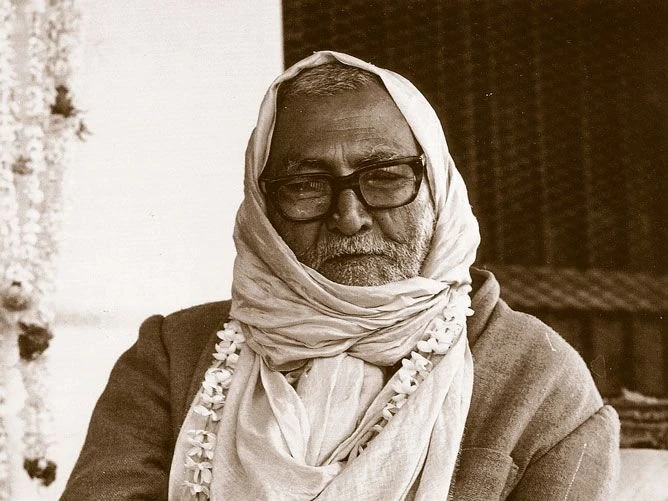
Glories of Śrīla Bhakti Rakṣaka Śrīdhara Deva Goswāmī Mahārāja
Spoken by Śrīla Bhakti Prapanna Tīrtha Goswāmī Mahārāja
In this lecture, Śrīla Bhakti Prapanna Tīrtha Goswāmī Mahārāja lovingly remembers the divine qualities and lasting contribution of his revered Gurudeva, Śrīla Bhakti Rakṣaka Śrīdhara Deva Goswāmī…
Read the full article →
The Glories of Śrīmatī Rādhārāṇī
Spoken by Śrīla Bhakti Prapanna Tīrtha Goswāmī Mahārāja
In this lecture, given on the auspicious occasion of Śrī Rādhāṣṭamī at Śrī Caitanya Śrīdhar Sevā Āśram, Rādhā Kuṇḍa Dhāma, on 23 September 2023, Śrīla Bhakti Prapanna Tīrtha Goswāmī Mahārāja…
Read the full article →
The Transforming Power of Kṛṣṇa-kathā
Spoken by Śrīla Bhakti Prapanna Tīrtha Goswāmī Mahārāja
In this affectionate address, Śrīla Bhakti Prapanna Tīrtha Goswāmī Mahārāja reflects on the transforming power of hearing and speaking Kṛṣṇa-kathā. Beginning with gratitude to the devotees and a humble appeal to hear the language of his heart, he explains that wherever Vaiṣṇavas gather, Vṛndāvana is present…
Read the full article →Glories of Śrīla Bhakti Rakṣaka Śrīdhara Deva Goswāmī Mahārāja
Spoken by Śrīla Bhakti Prapanna Tīrtha Goswāmī Mahārāja
In this lecture, Śrīla Bhakti Prapanna Tīrtha Goswāmī Mahārāja lovingly remembers the divine qualities and lasting contribution of his revered Gurudeva, Śrīla Bhakti Rakṣaka Śrīdhara Deva Goswāmī Mahārāja. Through personal recollections and the appreciations of senior Vaiṣṇavas, he reveals Guru Mahārāja’s profound humility, deep scriptural realization, and unwavering devotion to the teachings of Śrīla Bhaktisiddhānta Sarasvatī Ṭhākura. He also explains the living meaning of vāṇī-sevā, union in separation, and how sincere devotees may continue to receive the mercy and guidance of Śrī Guru through hearing, studying, and practising his teachings.
All glories to Śrī Guru and Śrī Gaurāṅga.
An Instruction from Mahāprabhu
Some construction work is presently going on here. We are arranging additional accommodation for the devotees who will be coming to Vṛndāvana. Mahāprabhu instructed His devotees, such as Subuddhi Rāya and Śrīla Sanātana Goswāmī:
“If My devotees come from Bengal, arrange proper accommodation for them. Give them yoghurt and rice, and provide oil for their bodies.”
In those days, especially in Vṛndāvana, yoghurt, rice, and body oil were considered essential, particularly during the winter season. Remembering Mahāprabhu’s instruction, we are very happily trying to arrange more accommodation for the devotees. Therefore, everyone is busy carrying materials, moving things upstairs, and rendering various services.
Before we begin, let us first offer our prayers.
Praṇāma Mantras
Śrī Guru Praṇāma
oṁ ajñāna-timirāndhasya
jñānāñjana-śalākayā
cakṣur unmīlitaṁ yena
tasmai śrī-gurave namaḥ
I offer my respectful obeisance unto my spiritual master, who has opened my eyes, blinded by the darkness of ignorance, with the torchlight of divine knowledge.
Then let us offer our obeisances to Śrī Guru, the Vaiṣṇavas, Śrī Rūpa, Śrī Sanātana, Śrī Raghunātha, Śrī Jīva Goswāmī, and all the associates of Mahāprabhu.
Śrī Caitanya Mahāprabhu Praṇāma
namo mahā-vadānyāya
kṛṣṇa-prema-pradāya te
kṛṣṇāya kṛṣṇa-caitanya-
nāmne gaura-tviṣe namaḥ
I offer my respectful obeisance unto Śrī Kṛṣṇa Caitanya Mahāprabhu, who is Kṛṣṇa Himself, appearing with a golden complexion to freely distribute divine love of Kṛṣṇa.
Śrī Rādhā Praṇāma
tapta-kāñcana-gaurāṅgī
rādhe vṛndāvaneśvari
vṛṣabhānu-sute devi
praṇamāmi hari-priye
I offer my respectful obeisance unto Śrīmatī Rādhārāṇī, whose complexion resembles molten gold, who is the Queen of Vṛndāvana, the daughter of King Vṛṣabhānu, and the beloved of Śrī Hari.
Hare Kṛṣṇa Hare Kṛṣṇa
Kṛṣṇa Kṛṣṇa Hare Hare
Hare Rāma Hare Rāma
Rāma Rāma Hare Hare
Welcoming the Devotees
We are very happy to have the opportunity to meet all of you through this Zoom gathering. Today we shall try to remember some of the divine glories of our most worshipful and most beloved spiritual master, Oṁ Viṣṇupāda Paramahaṁsa Parivrājakācārya-varya Śrīla Bhakti Rakṣaka Śrīdhara Deva Goswāmī Mahārāja.
Actually, I do not wish to be the only speaker today. If any of you would like to say something about Guru Mahārāja, I shall be very happy to hear. Why? Because love alone gives one the qualification to glorify a great soul. If you love Guru Mahārāja, then you already possess the only qualification required to speak about him. Therefore, I shall be very happy if some of you also share your remembrance of his divine qualities.
Today I can also see one new devotee among us. Perhaps he is new to many of you. His name is Vaṁśīdhārī Prabhu. Although he is from Russia, we first met him in Turkey. He is a disciple of Śrīla Bhakti Vedānta Śuddhadvaiti Mahārāja, and he is serving both his Gurudeva and Guru-varga very sincerely. I am very happy to welcome him today.
First of all, I would like us to read a few of the praṇāma-mantras. Some of them you already know. At least one of them is part of your daily vandanā. Today we shall not merely recite them—we shall also discuss their meaning. The remaining praṇāma-mantras are also extremely beautiful and spiritually powerful. If possible, try to memorise them and recite them every day.
The Importance of Mantra
Why? Because mantra is essential in devotional life. Whenever we perform pūjā, mantra is indispensable. When Śrī Caitanya Mahāprabhu revealed His Mahā-prakāśa-līlā in the house of Śrīvāsa Paṇḍita, He ascended the altar and instructed His devotees:
“Now worship Me. Perform My abhiṣeka.”
The devotees were overwhelmed with joy. They realised that Mahāprabhu was revealing Himself as Svayaṁ Bhagavān. He accepted their worship, their offerings, and their devotion. Vṛndāvana Dāsa Ṭhākura describes that the devotees performed the abhiṣeka while reciting mantras.
This teaches us an important principle. Arcana and pūjā should always be performed with a mantra. Without mantra, worship remains incomplete.
What is the significance of mantra? A mantra is not something we invent ourselves. It descends from higher authorities who are connected with the Supreme Lord. Through them we receive mantra. Even if our own devotion is weak, the mantra itself possesses spiritual potency. Just as, during a fire sacrifice, we offer ghee into the sacred fire while reciting mantras, those mantras carry our offering to its proper destination. In the same way, mantra carries our prayers to the Lord. Therefore, mantras are extremely important.
The Service of Translation
It is very encouraging to see how devotees from Western countries are translating so many of our scriptures and books—from Sanskrit, Bengali, and other languages—into English and many other languages. Many of them were not born in India and did not grow up within this culture, yet today they are rendering such valuable service.
Why is this possible? Because of love. If we truly love something, then everything else follows naturally. The Lord gives the necessary intelligence, strength, and ability. Perhaps we may never become great scholars, but at least we should understand these sacred prayers and know their meaning. That alone will greatly help our spiritual lives.
Śrīla Bhakti Rakṣaka Śrīdhara Deva Goswāmī Mahārāja Praṇāma-mantra
Every day we recite Guru Mahārāja’s praṇāma-mantra. You may already know it, but today let us reflect upon its meaning.
devaṁ divya-tanuṁ suchanda-vadanaṁ bālārka-chelāñchitaṁ
sāndrānanda-puraṁ sad-eka-varanaṁ-vairāgya-vidyāmbudhim
śrī-siddhānta-nidhiṁ subhakti-lasitaṁ-sārasvatānām varaṁ
vande taṁ śubhadaṁ mad-eka-śaraṇaṁ nyāsīśvaraṁ śrīdharam
One expression in this mantra has always remained deeply within my heart: nyāsīśvaraṁ śrīdharam.
I remember that every year, during Vyāsa-pūjā, Śrīla Bhakti Kamala Madhusūdana Mahārāja would come to Śrī Caitanya Sāraswat Maṭh in Navadvīpa. As soon as he entered through the front gate and approached the temple, he would repeatedly chant with great joy:
“nyāsīśvaraṁ śrīdharam… nyāsīśvaraṁ śrīdharam… nyāsīśvaraṁ śrīdharam…”
Again and again he would lovingly repeat those words. I can still remember that scene very vividly. Someone asked me, “Maharaj, which Maharaj are you referring to?” I replied, Śrīla Bhakti Kamala Madhusūdana Mahārāja.
He was one of the godbrothers of Śrīla Bhaktisiddhānta Sarasvatī Ṭhākura. He was a highly learned scholar. Later he accepted sannyāsa from Guru Mahārāja. Throughout his life he dedicated himself to the service of Śrīmad Bhāgavatam, and Prabhupāda affectionately honoured him with the title “Bhakti Kamala.” For some time he also served as the editor of the Gauḍīya Darśana magazine published from Śrī Caitanya Sāraswat Maṭh. Although he later established his own Maṭh and accepted disciples, his affection and reverence for Guru Mahārāja never diminished. Every year he would come for Vyāsa-pūjā, and I personally witnessed how deeply he honoured Guru Mahārāja.
Now, what does “nyāsīśvaraṁ śrīdharam” mean? It describes Śrīla Śrīdhara Mahārāja as the foremost leader among the tridaṇḍi sannyāsīs. Even the sound of these Sanskrit words is extraordinarily beautiful. Sometimes, even before we fully understand the meaning, simply hearing the Sanskrit brings spiritual joy. But when we understand the meaning, our appreciation becomes even deeper.
The mantra glorifies Guru Mahārāja in this way: he possesses a beautiful, radiant, golden form. He is the very embodiment of serenity. He is clothed in garments resembling the soft golden colour of the rising sun. He is worshipped by the truly wise. He is an ocean of divine knowledge and renunciation. He is the eternal abode of spiritual bliss. He is the treasure-house of perfect Gauḍīya siddhānta. He is adorned with pure devotion. He is the foremost follower of Śrīla Bhaktisiddhānta Sarasvatī Ṭhākura. He is unanimously honoured by the saintly Vaiṣṇavas. He freely bestows the highest auspiciousness upon everyone who takes shelter of him. Therefore I offer my respectful obeisances unto my worshipful Lord, Śrīla Bhakti Rakṣaka Śrīdhara Deva Goswāmī Mahārāja.
How wonderful this is! Every line reveals another aspect of Guru Mahārāja’s divine personality — his beautiful golden complexion, his profound serenity, his unlimited renunciation, his perfect philosophical conclusions, his pure devotion. Everything is contained within this single praṇāma-mantra. The great devotees relished these words because they recognised that they perfectly described Guru Mahārāja’s true nature. Even today, whenever I recite this mantra, I remember Śrīla Bhakti Kamala Madhusūdana Mahārāja joyfully repeating, “Neṣi-īśvaraṁ Śrīdharam… Neṣi-īśvaraṁ Śrīdharam…” and my heart becomes filled with gratitude.
Another Praṇāma
There is another beautiful verse glorifying Guru Mahārāja. He carries within himself the conception and devotional current of:
— Śrī Svarūpa Dāmodara,
— Śrī Rāmānanda Rāya,
— Śrīla Rūpa Goswāmī,
— and Śrīla Jīva Goswāmī.
He delivers all souls without discrimination, regardless of caste, social position, or worldly designation. One line of this prayer admits two beautiful meanings. It describes him as the very shelter of divine beauty and devotion. At the same time, it may also be understood as saying that he is the shelter of Śrīla Bhakti Sundara Govinda Deva Goswāmī Mahārāja. Both meanings are perfectly appropriate. Finally the prayer concludes:
“I offer my respectful obeisances unto Jagad-guru Śrīla Bhakti Rakṣaka Śrīdhara Deva Goswāmī Mahārāja.”
What a wonderful glorification. There is yet another beautiful verse glorifying Guru Mahārāja’s appearance and disappearance. We shall discuss that in detail another day.
Recently I had the opportunity to visit our Govardhana Maṭh, where we observed the Vyāsa-pūjā and Viraha-mahotsava of Guru Mahārāja. Many Vrajavāsī Vaiṣṇavas gathered there, and together we remembered his divine qualities and his incomparable contribution to the Gauḍīya Vaiṣṇava world.
At this point, I would like to hear from some of you. Please do not hesitate. If Guru Mahārāja has touched your life in some way, kindly share your experience.
A Devotee’s Testimony
One devotee then spoke.
“My real entrance into pure devotional life came through Śrīla Śrīdhara Mahārāja. By the mercy of Śrī Kṛṣṇa I first came across Bhagavad-gītā, and that changed my life. I began searching for devotees and for a genuine spiritual master.”
“Eventually I met some devotees of ISKCON and joined their brahmacārī āśrama. For some time I lived happily there. However, gradually I began to feel an inner dissatisfaction. I noticed a gap between the exalted ideals I was reading in the books of Śrīla A. C. Bhaktivedanta Swami Prabhupāda and the practical life I observed around me. I could not understand why that discrepancy existed.”
“Then one day I met a devotee whose Hari-kathā completely astonished me. Never before had I heard such profound and beautiful explanations. His words began transforming my life. I asked him, ‘Where have you learned all these wonderful things?’ He replied, ‘Everything I am speaking comes from the book Śrī Guru and His Grace, written by His Divine Grace Śrīla Bhakti Rakṣaka Śrīdhara Deva Goswāmī Mahārāja.’”
“From that moment my life changed again. I immediately began reading Guru Mahārāja’s books. The more I read, the more deeply I became attracted. His language is so sweet. His explanations are so elevated. His Hari-kathā completely captures the heart. One cannot continue living exactly as before after coming into contact with his teachings. If there is any genuine spirituality in my life today, its foundation has been laid by the teachings of Śrīla Śrīdhara Mahārāja.”
Guru Mahārāja’s Own Words: The Power of Scriptural Harmony
After hearing these heartfelt words, Guru Mahārāja smiled and replied:
“Very good. This is exactly the power of Guru Mahārāja’s writings. As we continue studying śāstra, we gradually begin to realise something remarkable. At first we simply appreciated the beauty of his language. Later we begin recognising where each idea comes from. Then we discover: ‘Oh! This statement is based upon this verse.’ ‘This explanation comes from another scripture.’ ‘This conclusion is drawn from another śāstra.’ Little by little we realise that Guru Mahārāja is speaking the language of śāstra itself. Everywhere we find scriptural harmony. He does not merely quote scripture. He reveals its inner harmony. He gathers together apparently distant scriptural statements and shows how they perfectly support one another. His explanations are at once profound, beautiful, logical, convincing, and full of devotion.”
“What amazes me most is that he accomplishes all this in English. We know that Sanskrit is celebrated as the perfect language for expressing transcendental truth. Yet Guru Mahārāja possessed such extraordinary mastery that even through the English language he was able to communicate the deepest conclusions of Gauḍīya Vaiṣṇava philosophy with astonishing clarity and beauty.”
“Personally, I have never encountered anyone else who could express such profound spiritual truths with this combination of philosophical precision, literary elegance, devotional feeling, and irresistible attractiveness. When we hear him speak about Bhagavān, we naturally understand that he has genuine realization. After all, Bhagavān is the source of all beauty. Only one who has truly come into contact with that supreme beauty can speak about Him with such extraordinary beauty. That is one of the external signs by which fallen souls like ourselves become attracted.”
Guru Mahārāja paused for a moment and smiled. “If I continue speaking like this,” he said gently, “I may never stop. So I shall stop here for the moment.” Then he again turned affectionately toward the devotees assembled online. “Would anyone else like to say something about Guru Mahārāja?”
Vāpu and Vāṇī: Two Manifestations of the Guru
After hearing the devotees’ heartfelt appreciation of Guru Mahārāja, I would also like to share something that has remained deeply within my own heart.
Although Guru Mahārāja is no longer physically present before our eyes, we should never think that he has gone away. The great saints possess two manifestations. One is vāpu—their visible, physical presence. The other is vāṇī—their eternal instructions. By great fortune, some devotees had the opportunity to serve Guru Mahārāja’s vāpu. Today, we may not have that same opportunity. But every one of us can still serve his vāṇī. His teachings remain eternally alive. Through those teachings he continues to guide, nourish, and protect sincere seekers.
Guru Mahārāja now resides in his eternal divine pastimes. He is in the eternal spiritual world, serving Śrī Śrī Rādhā-Govinda. Yet at the same time he continues to watch over those who sincerely seek his shelter. Anyone who establishes a genuine relationship with him through service, remembrance, and obedience to his instructions will certainly receive his mercy. There is no doubt about this.
Union in Separation
The other day, while observing Guru Mahārāja’s Viraha-mahotsava, a particular expression of his suddenly came to my mind. It is a very beautiful expression: “Union in separation.”
At first glance this appears contradictory. We observe a festival commemorating the disappearance of Guru Mahārāja. How can disappearance become a festival? A festival is usually associated with happiness. Disappearance appears to bring only sorrow. How can these two be harmonised?
Guru Mahārāja himself gave us the answer. Union in separation. When separation is genuine, union is also present. When we truly remember our Gurudeva… when we sincerely long for his association… when our heart cries in separation… then that remembrance itself becomes a meeting.
Those great personalities are eternal. They have not ceased to exist. They continue to live in the eternal plane. If our remembrance is sincere, they certainly respond. Perhaps we may not immediately perceive that response. Perhaps we may not see it with our external eyes. But it is real. Nothing offered with genuine devotion is ever lost. Nothing offered to Guru and Kṛṣṇa goes in vain. When longing for Guru deepens within the heart, Guru also draws nearer to that heart. This is the mystery of union in separation.
A Historical Example: Śrīla Bhaktisiddhānta Sarasvatī Ṭhākura’s Burden
There is a beautiful historical example illustrating this principle. After the disappearance of Śrīla Bhaktivinoda Ṭhākura and Śrīla Gaura Kiśora Dāsa Bābājī Mahārāja, Śrīla Bhaktisiddhānta Sarasvatī Ṭhākura felt an immense burden resting upon him.
Śrīla Bhaktivinoda Ṭhākura had entrusted him with a tremendous mission. He had instructed him to establish the pure conception of devotional service throughout the world. He was to reveal Śrīdhāma Māyāpura to the world. He was to preach the revealed scriptures. He was to publish transcendental literature. He was to establish the worship of the Deity. He was to recover the lost holy places connected with Mahāprabhu’s pastimes. He was to fulfil all the desires of the previous ācāryas. These were not ordinary responsibilities.
After the disappearance of his Gurudeva and his śikṣā-guru, Śrīla Bhaktisiddhānta Sarasvatī Ṭhākura felt completely alone. He lamented deeply:
“How shall I accomplish all this? I have no manpower. I have no financial resources. I possess nothing. How can I possibly fulfill their desire?”
He prayed with great intensity. He cried before the Lord. That very night something extraordinary happened. Śrīla Bhaktivinoda Ṭhākura appeared before him. Śrīla Gaura Kiśora Dāsa Bābājī Mahārāja also appeared. Not only that—Śrī Gaurāṅga Mahāprabhu Himself appeared together with His eternal associates. They offered him encouragement. They reassured him. They told him:
“Do not be discouraged. Begin your service. Everything will come. Simply start. All that is required has already been arranged.”
What wonderful encouragement! The next morning Śrīla Bhaktisiddhānta Sarasvatī Ṭhākura arose with completely renewed determination. His hesitation had disappeared. His lamentation had vanished. He was filled with divine enthusiasm.
From that day onward everything gradually arrived. Dedicated workers came. Resources came. Devotees came. Printing presses appeared. Books were published. Temples were established. One by one, all the arrangements manifested by the mercy of Guru and Gaurāṅga.
When we look back today, we can hardly imagine those humble beginnings. Māyāpura at that time was a small, undeveloped village. There were almost no facilities. Transportation was extremely limited. Yet from that apparently insignificant beginning arose the mighty Gauḍīya Maṭha movement. Śrīla Prabhupāda established a printing press and began publishing transcendental literature. Even with the old hand-operated letterpress technology of those days, he produced the daily newspaper Nadīyā Prakāśa. Every single letter had to be set by hand. There were no computers. No modern printing machines. Yet he tirelessly published day after day. From that humble beginning, the message of Mahāprabhu spread throughout India and eventually throughout the world.
What should we learn from this? Guru-varga is real. Bhagavān is real. Their mercy is real. If we sincerely surrender to them… if we truly pray… if we dedicate our lives to their service… then they will certainly guide us. They will certainly help us. Their response may not always come in the way we expect. But it will surely come. Nothing done in their service is ever wasted. Nothing offered with sincerity disappears. Everything is eternally preserved.
Vāṇī-sevā: Serving Guru Through His Words
Therefore, we should never think that our Guru-varga has left us. They are eternally present through their vāṇī. Although we may not have had the opportunity to render vāpu-sevā, we can still perform vāṇī-sevā every day. By studying their books… by hearing their Hari-kathā… by following their instructions… by living according to their teachings… we can satisfy them just as surely.
Sometimes a single sentence from Guru Mahārāja’s books gives us such extraordinary inspiration that our entire life changes. Why? Because his words are not ordinary words. They are living words. They carry spiritual life. They awaken spiritual life within us. When we sincerely come into contact with his vāṇī, we gradually begin to know him. We begin to understand who he really is. We begin to understand his heart. We begin to understand his conception. Everything gradually becomes revealed.
Testimonies of the Godbrothers
There is one incident that I have remembered many times. Perhaps some of you have already heard it. There is an old Bengali recording in which Śrīla Bhakti Vedānta Swami Mahārāja recalls something spoken by Śrīla Bhaktisiddhānta Sarasvatī Ṭhākura. Prabhupāda had said:
“Śrīdhara Mahārāja will preserve our line. He will protect our devotion.”
Those words are extremely significant. When this was later mentioned before Guru Mahārāja, he smiled with great humility. He said, “Did Prabhupāda really say that?” Then, after reflecting for a moment, he added, “Perhaps he appreciated my Bhaktivinoda-viraha-daśakam.” He was referring to the Sanskrit composition he had written upon the disappearance of Śrīla Bhaktivinoda Ṭhākura. Prabhupāda was greatly pleased with that composition. It deeply touched his heart. Guru Mahārāja never claimed any greatness for himself. Rather, he attributed everything to the mercy of his Gurudeva. Such was his natural humility.
It is a wonderful thing to hear these kinds of remembrances from the godbrothers of Guru Mahārāja. How do we recognise the greatness of a saint? Not because he proclaims his own greatness. A genuine saint never does that. We understand his greatness when other great souls speak about him. When exalted Vaiṣṇavas glorify another Vaiṣṇava, those words carry immense weight.
Throughout my life I had the good fortune to hear many of Guru Mahārāja’s godbrothers lovingly speak about him. I heard Śrīla Bhakti Prajñāna Keśava Mahārāja. I heard Śrīla Bhakti Śaraṇa Goswāmī Mahārāja. I heard Śrīla Bhakti Kamala Madhusūdana Mahārāja. I heard many other senior Vaiṣṇavas. Again and again they spoke of Guru Mahārāja with profound affection and deep reverence. Those memories remain with me even today.
I especially remember hearing Śrīla Bhakti Kamala Madhusūdana Mahārāja say during one Vyāsa-pūjā festival:
“When we come here and hear Śrīdhara Mahārāja speak, it is just as if we are hearing Śrīla Prabhupāda himself.”
What greater praise could there be? Those who had personally served Śrīla Bhaktisiddhānta Sarasvatī Ṭhākura recognised the same current of divine conception flowing through Guru Mahārāja.
Another incident also reveals Prabhupāda’s special affection. During the final days before his disappearance, Śrīla Bhaktisiddhānta Sarasvatī Ṭhākura requested that various devotees sing particular kīrtanas. When Guru Mahārāja was present, Prabhupāda specifically requested him to sing. The assembled godbrothers immediately understood the significance of this. Prabhupāda was not merely requesting a song. He was revealing before everyone the unique spiritual position that Śrīdhara Mahārāja occupied within his heart. Many senior disciples witnessed this personally. Later they repeatedly spoke about it.
Another respected godbrother, Śrīla Bhakti Prajñāna Keśava Mahārāja, although senior to Guru Mahārāja in age, eventually accepted sannyāsa from him. Just consider what that means. External seniority has little importance. Real spiritual qualification alone is meaningful. This demonstrates the deep faith and confidence that many of the senior Vaiṣṇavas placed in Guru Mahārāja.
There was also an especially affectionate relationship between Guru Mahārāja and Śrīla Bhakti Dayita Mādhava Mahārāja. Guru Mahārāja composed the praṇāma-mantra for Śrīla Mādhava Mahārāja. Whenever learned people gathered in Calcutta, Śrīla Mādhava Mahārāja would often invite Guru Mahārāja to speak. He wanted an educated society to hear genuine Hari-kathā. At that time Calcutta was the intellectual centre of India. Many thoughtful and cultured people would gather there. Guru Mahārāja would explain the deepest truths of Gauḍīya Vaiṣṇavism with extraordinary clarity. Those who heard him were deeply moved. His explanations were profound enough to satisfy great scholars, yet simple enough to nourish sincere seekers. That was one of Guru Mahārāja’s unique gifts. He could present the highest spiritual conception in language that entered directly into the heart.
“I Never Wanted to Become a Big Person”
There are so many glories of Guru Mahārāja that one could continue speaking for hours without reaching the end. I would like to recall another beautiful incident.
His Divine Grace Śrīla A. C. Bhaktivedanta Swami Mahārāja once affectionately invited Guru Mahārāja to come and reside permanently in Māyāpura. He said to him:
“Maharaj, please come to Māyāpura. I shall arrange everything for you. I shall build a house for you. I shall even install a lift so that you will not have to climb the stairs. I shall bring sincere seekers from the Western countries. You simply educate them. Give them proper spiritual training. You become the president here.”
Such was his loving invitation. But Guru Mahārāja simply smiled. Laughing gently, he replied, “Maharaj, I never wanted to become a big person.”
Then he spoke words that have remained forever in my heart.
Whenever I remember these words, my heart becomes deeply moved. Just see his humility. Just see his mood. He had absolutely no desire for fame. No desire for a position. No desire to become a celebrated leader. His only aspiration was to faithfully preserve and discuss the conclusions received from his Gurudeva. That alone completely satisfied him.
His Method of Preaching
Someone may ask, “Then did Guru Mahārāja not preach?” Certainly he preached. But his method was different. He was very much like Śrīla Rūpa Goswāmī and Śrīla Sanātana Goswāmī. They did not travel everywhere giving public lectures day after day. Rather, they wrote. They discussed. They instructed sincere seekers. They preserved the eternal wealth of Gauḍīya siddhānta for future generations. Today the whole world is nourished by those books.
Guru Mahārāja followed that same current. He would often say, “I cannot work with large crowds.” But that never meant he was inactive. Far from it. Just consider how much he wrote. How many books he produced. How many profound conversations he gave—especially during the later years of his manifest pastimes, when devotees from Europe, America, Russia, Australia, South America, and many other countries began coming to Śrī Caitanya Sāraswat Maṭh. Hour after hour he would answer their questions. He never withheld anything. He poured out the deepest wealth of his heart. Those intimate conversations, held within a small confidential gathering, have now spread throughout the world. Today countless devotees are nourished by those very discussions. What was once spoken to only a few has become an inexhaustible treasure for everyone.
I remember Śrīla Bhakti Pramoda Purī Goswāmī Mahārāja once making a very beautiful observation. He said:
“Śrīdhara Mahārāja preached to the whole world without leaving his bed.”
Just think about that. He never travelled widely throughout the world. The world came to him. And from his room… from his veranda… from his bed… his words travelled to every continent. How wonderful!
I also remember another beautiful expression spoken by one of our senior Vaiṣṇavas. He said:
“The courtyard of Śrīla Guru Mahārāja is like the courtyard of Nanda Mahārāja.”
Whenever I heard those words, I remembered the atmosphere at Śrī Caitanya Sāraswat Maṭh, especially during Janmāṣṭamī. The kīrtana… the Hari-kathā… the devotees… the Deity worship… everything combined to create such an extraordinary spiritual atmosphere. At times I genuinely felt as though little Kṛṣṇa had just been playing there. Such was the sweetness of that place.
Even today the courtyard remains. When we visit, we still feel Guru Mahārāja’s presence. Yet at the same time we cannot help feeling the pain of separation. He is present. Yet we long to see him as before. This is again the mystery of union in separation.
Sacred Places of His Childhood
Another remembrance comes to my mind. Śrī Kṛṣṇadāsa Bābājī Mahārāja once visited the village where Guru Mahārāja had appeared. He went from place to place asking the villagers, “Where did Śrīdhara Mahārāja study?” “Which pond did he bathe in?” “Where did he spend his childhood?” He eagerly wanted to see every place connected with Guru Mahārāja’s early life.
When he later returned, Guru Mahārāja smilingly asked, “Maharaj, why did you go there? Why were you asking about my school, my village, and all those places?”
Kṛṣṇadāsa Bābājī Mahārāja replied with great feeling:
“Maharaj, whenever I read your Sanskrit compositions, I experience the same devotional feeling that comes when I read the writings of Śrīla Rūpa Goswāmī. Therefore I wanted to see the place where such a personality appeared. I wanted to see where you were born. I wanted to see where you spent your childhood. Everything connected with you has become sacred to me.”
Just consider what a remarkable appreciation this was. Many exalted Vaiṣṇavas cherished Guru Mahārāja’s writings in exactly this way. Whenever a new book by Guru Mahārāja appeared, they eagerly requested a copy immediately. They wanted to read every page. They recognised the extraordinary wealth hidden within his words.
His Literary and Artistic Legacy
One of the extraordinary features of Guru Mahārāja’s writings is the depth contained within every single verse. Each śloka carries so much meaning… so much siddhānta… so much realization… that one could write an entire thesis on a single verse. Nothing is superficial. Every word has been carefully chosen. Every expression carries profound theological significance. That is why devotees continue discovering newer and newer insights every time they read his works.
Guru Mahārāja was one of the foremost Sanskrit scholars of the Gauḍīya Maṭha. He composed numerous Sanskrit prayers, hymns, and philosophical works. Just consider Prapanna-jīvanāmṛtam. It is almost entirely composed in Sanskrit. The depth of scriptural realization found there is extraordinary. He also composed many beautiful stotras, devotional hymns, and Bengali poems. Each composition possesses its own unique sweetness. Whenever the senior Vaiṣṇavas heard these compositions, they were deeply moved.
One of Guru Mahārāja’s remarkable qualities was that he never merely repeated what others had already written. He expressed the eternal truth in a fresh, living language. The conception remained unchanged. The presentation became ever fresh. That is the nature of genuine realization.
Take, for example, the kīrtana “Jaya Śacīnandana, Sura-muni-vandana…” How beautifully he glorified Śrī Caitanya Mahāprabhu! His Bengali compositions describing the appearance of Mahāprabhu are filled with devotional feeling and poetic beauty. Even today devotees relish singing them.
Then there is his incomparable Sanskrit hymn, Prema-dhāma-deva-stotram. Many senior Vaiṣṇavas would say, “No one can imitate it.” I remember hearing Śrīla Bhakti Prajñāna Keśava Mahārāja make a very striking observation. He said there were two things that no one could successfully imitate. The first was Prema-dhāma-deva-stotram. The second was the unique temple dome designed by Guru Mahārāja at Śrī Caitanya Sāraswat Maṭh. Guru Mahārāja himself conceived its design. Others later attempted to build similar domes. But they could never reproduce the same beauty and character. Keśava Mahārāja would smilingly say, “These two things cannot be copied.” They are uniquely Guru Mahārāja’s.
This illustrates something very important. Guru Mahārāja never tried to be different merely for the sake of being different. Originality was not his goal. His originality arose naturally from deep realization. When genuine realization expresses itself, it always appears fresh. It always reveals some new beauty within eternal truth. That freshness cannot be manufactured. It cannot be copied. It cannot be imitated.
I also remember how eager the senior Vaiṣṇavas were whenever one of Guru Mahārāja’s books was published. As soon as a new work appeared—whether in Bengali, English, or Sanskrit—they immediately wanted a copy. They knew that every book contained new treasures. They wanted to study every page. They wanted to relish every explanation.
One example especially comes to mind. Guru Mahārāja’s explanation of the Gāyatrī-mantra is unlike anything else. Many devotees have told me, “Only after reading Guru Mahārāja’s explanation did we begin to understand the inner significance of Gāyatrī.” His explanation does not merely discuss grammar or ritual. He reveals its devotional heart. He uncovers its connection with the highest ideal of divine service. Its inner current becomes visible. That is Guru Mahārāja’s special gift. He reveals the living heart hidden within scriptural language. I remember that these explanations were later published in both Bengali and English so that devotees everywhere could benefit from them. Such treasures should be carefully preserved. Future generations of devotees will continue drawing nourishment from them.
How wonderful is Guru Mahārāja! Whether through his Sanskrit compositions… his Bengali poetry… his English Hari-kathā… or his profound philosophical writings… everywhere we encounter the same current: pure devotion, perfect siddhānta, deep realization, extraordinary humility, and incomparable beauty. That is why his books continue to nourish sincere seekers throughout the world.
The Greatest Glorification: Living His Teachings
The glories of Guru Mahārāja have no end. Even after speaking for many hours, we feel we have hardly begun. Whatever little I have remembered today is only a tiny drop from an unlimited ocean. Still, if somehow these few remembrances inspire us to study Guru Mahārāja’s books more deeply, then today’s gathering will have been successful.
In reality, there is no end to Guru Mahārāja’s glories. One may continue speaking for hours… for days… indeed, for an entire lifetime… and still feel that only a tiny fraction has been expressed. His greatness is unlimited. His mercy is unlimited. His contribution to the Gauḍīya Vaiṣṇava world is beyond calculation.
Today I have simply remembered a few incidents that came to my heart. What has touched me most throughout my life is not merely Guru Mahārāja’s extraordinary scholarship. Nor is it only his profound realization. It is his humility. His simplicity. His complete absence of any desire for prestige. Although he possessed unparalleled learning… although even the greatest Vaiṣṇavas honoured him… he always remained the humble servant of his Gurudeva. That is his greatest ornament. Knowledge decorated by humility becomes truly beautiful. Realization adorned with surrender becomes irresistible. Guru Mahārāja possessed both in perfection.
Sometimes devotees ask, “What is the proper way to approach Guru Mahārāja?” My answer is very simple. Read his books. Hear his Hari-kathā. Study his explanations carefully. Do not read them quickly. Read slowly. Read prayerfully. Again and again. Each time you return, you will discover something new. His books are not ordinary books. They reveal new meanings according to the sincerity of the reader. The deeper one enters, the more Guru Mahārāja himself begins to reveal his heart.
I have personally experienced this. Many times I have returned to a passage that I had read years earlier. Suddenly I found an entirely new meaning there. The words had not changed. I had changed. As our devotional understanding grows, Guru Mahārāja’s books continue unfolding before us. They are living books. That is why they never become old.
If we sincerely desire to please Guru Mahārāja, then we should not merely praise him with our words. We should try to live according to his teachings. That is the greatest glorification. That is the greatest offering. That is the greatest gratitude. His life teaches us to remain humble. To remain faithful. To remain deeply attached to the conclusions of the previous ācāryas. To seek no honour for ourselves. To simply become instruments in the service of Śrī Guru and Śrī Gaurāṅga. If we can cultivate even a small portion of that mood, our lives will become successful.
Today I simply wanted to remember my Gurudeva. If, by hearing these few words, even one devotee feels inspired to open one of Guru Mahārāja’s books… to read one more page… to meditate a little more deeply upon his teachings… then I shall feel that today’s meeting has fulfilled its purpose.
I am very grateful to all of you for joining today. I especially thank those devotees who shared their own realizations. Hearing the heartfelt appreciation of devotees always gives great joy. It strengthens our own faith. It reminds us how fortunate we are to have come into contact with such exalted personalities.
Unfortunately, today I shall not be able to take questions. In a few minutes I have another Zoom meeting to attend. So before we conclude, let us together chant the Holy Names.
Śrī Kṛṣṇa Caitanya Prabhu Nityānanda
Śrī Advaita Gadādhara
Śrīvāsādi Gaura-bhakta-vṛnda
Hare Kṛṣṇa Hare Kṛṣṇa
Kṛṣṇa Kṛṣṇa Hare Hare
Hare Rāma Hare Rāma
Rāma Rāma Hare Hare
Whatever little I have remembered today is only by the mercy of Guru Mahārāja. His glories are unlimited. Please forgive any mistakes in my remembrance. Let us continue praying for his mercy and trying to serve his divine mission together.
Thank you all very much.
Haribol.
The Glories of Śrīmatī Rādhārāṇī
Spoken by Śrīla Bhakti Prapanna Tīrtha Goswāmī Mahārāja
In this lecture, given on the auspicious occasion of Śrī Rādhāṣṭamī at Śrī Caitanya Śrīdhar Sevā Āśram, Rādhā Kuṇḍa Dhāma, on 23 September 2023, Śrīla Bhakti Prapanna Tīrtha Goswāmī Mahārāja glorifies the supreme position of Śrīmatī Rādhārāṇī in the Gauḍīya Vaiṣṇava tradition. Drawing from the teachings of Śrī Caitanya Mahāprabhu, the Six Goswāmīs, the Guru-varga, and the revealed scriptures, he explains Her unique position as the embodiment of mahābhāva, the source of Śrī Kṛṣṇa’s highest pleasure, and the indispensable guide to attaining pure devotional service. He also emphasizes the proper mood and qualification required to approach these most confidential topics.
jaya navadvīpācala śrī śrī guru-gaurāṅga-gāndharvikā-govinda-sundara jīu ki jaya.
guru-gaurāṅga rādhā-madana-mohana rādhā-giridhārī rādhā-gopīnātha jīu.
paramahaṁsa parivrājakācārya śrī śrīmad bhakti rakṣaka śrīdhara deva-goswāmī mahārāja ki jaya.
paramahaṁsa bhakti sundara govinda deva-goswāmī mahārāja ki jaya.
sāraswata ācārya-vṛnda ki jaya.
paramahaṁsa parivrājakācārya jagad-guru oṁ viṣṇupāda śrīla bhaktisiddhānta sarasvatī goswāmī prabhupāda ki jaya.
śrīla rūpānuga guru-varga ki jaya.
nāmācārya śrīla haridāsa ṭhākura ki jaya.
ananta-koṭi vaiṣṇava-vṛnda ki jaya.
samaveta bhakta-vṛnda ki jaya.
tulasī mahārāṇī ki jaya.
harināma-saṅkīrtana ki jaya.
rādhārāṇī ki jaya! rādhāṣṭamī ki jaya!
rādhārāṇī āvirbhāva-mahā-mahotsava ki jaya!
all assembled vaiṣṇava-vṛnda ki jaya!
vande ’haṁ śrī-guroḥ śrī-yuta-pada-kamalaṁ śrī-gurūn vaiṣṇavāṁś ca
śrī-rūpaṁ sāgrajātaṁ saha-gaṇa-raghunāthānvitaṁ taṁ sa-jīvam
sādvaitaṁ sāvadhūtaṁ parijana-sahitaṁ kṛṣṇa-caitanya-devaṁ
śrī-rādhā-kṛṣṇa-pādān saha-gaṇa-lalitā-śrī-viśākhānvitāṁś ca
oṁ ajñāna-timirāndhasya jñānāñjana-śalākayā
cakṣur unmilitaṁ yena tasmai śrī-gurave namaḥ
gurvvābhīṣṭa-supūrakaṁ guru-gaṇair āśīṣa-saṁbhūṣitaṁ
cintyācintya-samasta-veda-nipuṇaṁ śrī-rūpa-panthānugam
govindābhidham ujjvalaṁ vara-tanuṁ bhakty anvitaṁ sundaraṁ
vande viśva-guruñ ca divya-bhagavat-premṇo hi bīja-pradam
kanaka-surucirāṅgaṁ sundaraṁ saumya-mūrtiṁ
vibudhakula-vareṇyaṁ śrī-guruṁ siddhi-pūrtim
taruṇa-tapana-vāsaṁ bhaktidaṁ cid-vilāsaṁ
bhaja bhaja tu manore! śrīdharaṁ śamvidhānam
gaurāṅgaika-gatir-vrajāśrita-matiḥ śrī-gaura-dhāma-sthitiḥ
sacchāstraika-vṛtiḥ kusaṅga-viratir-duḥstha-vyathā-niṣkṛtiḥ
śrī-rūpaika-ratiḥ sanātana-natiḥ śrī-jīva-tejastatiḥ
śrī-siddhānta-sarasvatī vijayate gauḍīya-goṣṭhī-patiḥ
guru-daṁ grantha-daṁ gaura-dhāma-daṁ nāma-dam mudā
bhakti-daṁ bhūri-daṁ vande bhaktivinodakaṁ sadā
vāñchā-kalpatarubhyaś ca kṛpā-sindhubhya eva ca
patitānāṁ pāvanebhyo vaiṣṇavebhyo namo namaḥ
pañca-tattvātmakaṁ kṛṣṇaṁ bhakta-rūpa-svarūpakam
bhaktāvatāraṁ bhaktākhyaṁ namāmi bhakta-śaktikam
namo mahāvadānyāya kṛṣṇa-prema-pradāya te
kṛṣṇāya kṛṣṇa-caitanya-nāmne gaura-tviṣe namaḥ
jayatāṁ suratau paṅgor mama manda-mater-gatī
mat-sarvasva-padāmbhojau rādhā-madana-mohanau
dīvyad-vṛndāraṇya-kalpa-drumādhaḥ
śrīmad-ratnāgāra-siṁhāsanasthau
śrī-gāndharvā-śrīla-govinda-devau
preṣṭhālibhiḥ sevyamānau smarāmi
śrīmān rāsa-rasārambhī vaṁśīvaṭa-taṭasthitaḥ
karṣan veṇu-svanair gopīr gopīnāthaḥ śriye ’sthu naḥ
vṛndāyai tulasī-devyai priyāyai keśavasya ca
kṛṣṇa-bhakti-prade devi satyavatyai namo namaḥ
atha natvā mantra-gurūn gurūn bhāgavatārtha-dān
vyāsān jagad-gurūn natvā tato jayam-udīrayet
jayaḥ sa-parikara-śrī-śrī-guru-gaurāṅga-gāndharvā-govinda-sundara-pāda-padmānāṁ jayastu
tapta-kāñcana-gaurāṅgī rādhe vṛndāvaneśvari
vṛṣabhānu-sute devi praṇamāmi hari-priye
rādhe vṛndāvanādhīśe karuṇāmṛta-vāhini
kṛpayā nija-padābja-dāsyaṁ mahyaṁ pradīyatām
śrī-kṛṣṇa-caitanya prabhu-nityānanda
śrī-advaita gadādhara śrīvāsādi-gaura-bhakta-vṛnda
hare kṛṣṇa hare kṛṣṇa kṛṣṇa kṛṣṇa hare hare
hare rāma hare rāma rāma rāma hare hare
nānā-śāstra-vicāraṇaika-nipuṇau sad-dharma-saṁsthāpakau
lokānāṁ hita-kāriṇau tri-bhuvane mānyau śaraṇyākarau
rādhā-kṛṣṇa-padāravinda-bhajanānandena mattālikau
vande rūpa-sanātanau raghu-yugau śrī-jīva-gopālakau
he rādhe vraja-devike! ca lalite! he nanda-sūno! kutaḥ
śrī-govardhana-kalpa-pādapa-tale kālindī-vanye kutaḥ
ghoṣantāv iti sarvato vraja-pure khedair mahā-vihvalau
vande rūpa-sanātanau raghu-yugau śrī-jīva-gopālakau
So today is Rādhāṣṭamī, Śrīmatī Rādhārāṇī’s auspicious appearance day. And I am happy that you all are eagerly waiting for some of Rādhārāṇī’s glories to hear. I will try. It is a very high topic, you know, but at least we can reach, we can hear the glories given by our Goswāmīs, ṣaḍ-goswāmīs, mainly Rūpa, Sanātana, etc., and our Guru-varga. We can just remember today.
Why Mahāprabhu Revealed Her Glory
And we know that Śrī Kṛṣṇa Himself came as Gaurāṅga to tell us the glories of Rādhārāṇī, right? And Vāsudeva Ghoṣa wrote:
yadi gaura nā ha-ita, tabe ki ha-ita, kemane dharitām de
rādhāra mahimā, prema-rasa-sīmā, jagate jānāta ke
— Śrī Vāsudeva Ghoṣa, “Yadi Gaura nā ha-ita.”
If there was no Gaurāṅga, who is going to tell us the glories of Rādhārāṇī? He is the highest, prema-rasa-sīmā. His prema, His love for Kṛṣṇa reached the final border—prema-rasa-sīmā. Extreme prema, love for Kṛṣṇa. Who is going to tell us if Gaurāṅga had not come?
Śrīla Prabodhānanda Sarasvatīpāda also mentioned a very nice śloka like this about Rādhārāṇī—that if not for Gaurāṅga, who could ever know Rādhārāṇī’s divine glories? Only Mahāprabhu, eka Caitanyacandra, has given Her to the world.
And we also find it in Śrīla Kṛṣṇadāsa Kavirāja Goswāmī’s Caitanya-caritāmṛta. He described the divine glories of Rādhārāṇī so nicely in Bengali.
And Śrīla Rūpa and Sanātana Goswāmī described Her, and our Gurudeva Prabhupāda, Śrīla Bhaktisiddhānta Sarasvatī Ṭhākura, and our Guru Mahārāja—they have given us so much, and we can try to remember all these things today.
The Prayer to Śrīla Bhaktivinoda Ṭhākura
Śrīla Guru Mahārāja composed a śloka:
śrī-gaurānumataṁ svarūpa-viditaṁ rūpāgrajenādṛtaṁ
rūpādyaiḥ pariveśitaṁ raghu-gaṇair āsvāditaṁ sevitam
jīvādyair abhirakṣitaṁ śuka-śiva-brahmādi-sammānitam
śrī-rādhā-pada-sevanāmṛtam aho tad dātum īśo bhavān
— Śrīla Bhakti Rakṣaka Śrīdhara Deva Goswāmī, Śrīmad Bhaktivinoda-viraha-daśakam 9.
This śloka is from Śrīmad Bhaktivinoda-viraha-daśakam, verse 9. Guru Mahārāja composed it, and Śrīla Prabhupāda Bhaktisiddhānta Sarasvatī Ṭhākura was very happy to see such a nice śloka. What is the meaning, in short?
Śrī-gaurānumatam: the concept of Gaurāṅga. Svarūpa-viditam: known to Svarūpa Dāmodara. Rūpāgrajenādṛtam: appreciated by Rūpa’s elder brother, Sanātana Goswāmī. Rūpādyaiḥ pariveśitam: distributed by Rūpa Goswāmī and his followers, like Narottama Dāsa Ṭhākura and Bhaktivinoda Ṭhākura. Raghu-gaṇair āsvāditaṁ sevitam: tasted and served by Raghunātha Dāsa Goswāmī and his followers. Jīvādyair abhirakṣitam: protected by Jīva Goswāmī. Śuka-śiva-brahmādi-sammānitam: honoured by Śukadeva, Śiva, Brahmā, and the other demigods.
And what is that? Rādhā-pada-sevanāmṛtam—the nectar of service to Rādhārāṇī’s lotus feet. Tad dātum īśo bhavān: Guru Mahārāja is saying to Śrīla Bhaktivinoda Ṭhākura, “You also give that Rādhā-pada-sevā to us, to the world.”
So in this way we are hearing of Svarūpa Dāmodara, Mahāprabhu, Sanātana Goswāmī, Rūpa Goswāmī, Raghunātha Dāsa Goswāmī, Jīva Goswāmī, and then Śukadeva, Śiva, and Brahmā—all worshipping that thing. So it is so high.
And Śrīla Bhaktisiddhānta Sarasvatī Ṭhākura, in his Upadeśāmṛta, told us that one who serves Viṣṇu is known as a Vaiṣṇava. One who serves Śiva is a Śaiva. One who serves Śakti—Durgā, Kālī—is a Śākta. One who serves Kṛṣṇa is a Kārṣṇa. And one who serves Rādhārāṇī, they are Gauḍīya!
The Appearance of Śrīmatī Rādhārāṇī
So today you all know how Rādhārāṇī appeared, how Kṛṣṇa appeared. There is some story—all divine. It is like a līlā. It is not like an ordinary human being’s birth. All are divya-mayam, all divine, a līlā. Their janma and karma are divine pastimes. So an ordinary brain cannot understand. But those who do understand, Kṛṣṇa says, will go to His divine abode; they will not stay in this material world. So it is divine, but at least when we worship, remember, or hear these pastimes, we shall get benefit, no doubt.
We heard from our Guru-varga how She appeared. We are told that She was found floating in a lotus. Her father, Vṛṣabhānu Rāja, a chief cowherd keeper, was childless. Suddenly one day he found in the Yamunā, on a lotus, a beautiful girl—but with closed eyes. He took her home. The girl was beautiful, perfect, but her eyes were closed.
Vṛṣabhānu Rāja had a friendship with Nanda Mahārāja. He too was a chief cowherd keeper, and they had a natural friendship.
Yaśodā heard that her friend Kīrtidā, who had no child, had suddenly found a girl of exquisite beauty—blind—and taken her home from a lotus on the Yamunā. Yaśodā went to visit and congratulate Kīrtidā, taking Kṛṣṇa with her. As Yaśodā and Kīrtidā were talking, Kṛṣṇa went up to the girl, and she suddenly opened her eyes and saw first the boy, Kṛṣṇa.
This is the līlā. Eternal incidents, repeated in a particular way, like a drama being performed again and again in the eternal quarters. Sometimes the screen is taken away, and it flashes forth in a particular place. In the original abode the līlā is going on co-existently. All līlās are a succession, and yet co-existent. By His will, some glimpses come into the mundane universe as an exhibition, to attract people to His service. So it occurred in that way: the children’s first union, exchanging their vision.
Afterwards Vṛṣabhānu, and Kīrtidā the chief queen, began to nurture the baby, and gradually the girl grew up. Vṛṣabhānū-dadhi nava-śaśilekhe—Rūpa Goswāmī mentions that, just as the moon is supposed to come from the kṣīroda-samudra, the ocean of milk (and indeed some present-day geologists hold the opinion that the moon shot forth from the Pacific Ocean, in keeping with Indian mythology’s similar view of the moon emerging from the ocean of milk), so Śrīla Rūpa Goswāmī compares the family of Vṛṣabhānu to that very ocean, from which the moon of Rādhārāṇī has sprung up.
Such a beautiful comparison! The fortune of Vṛṣabhānu is compared to the ocean, and from it has sprung the moon, Śrī Vṛṣabhānu-nandinī Śrī Rādhikā. Now let us read some ślokas that Kṛṣṇadāsa Kavirāja mentioned about Rādhārāṇī in Caitanya-caritāmṛta—verses engraved even in our temples in Navadvīpa.
The Meaning of Kṛṣṇamayī
hlādinīra sāra ‘prema’, prema-sāra ‘bhāva’
bhāvera parama-kāṣṭhā, nāma — ‘mahā-bhāva’
mahābhāva-svarūpā śrī-rādhā-ṭhākurāṇī
sarva-guṇa-khani kṛṣṇa-kāntā-śiromaṇi
— Śrī Caitanya-caritāmṛta, Ādi-līlā 4.68–69.
The essence of hlādinī is prema. The essence of prema is bhāva. And the ultimate expression of bhāva is mahābhāva. Śrī Rādhā Ṭhākurāṇī is the very embodiment of mahābhāva. She is the mine of all good qualities and the crest jewel of all the lovers of Kṛṣṇa.
And another śloka:
devī kṛṣṇa-mayī proktā
rādhikā para-devatā
sarva-lakṣmī-mayī sarva-
kāntiḥ sammohinī parā
— Bṛhad-gautamīya-tantra, quoted in Śrī Caitanya-caritāmṛta, Ādi-līlā 4.83.
Śrī Rādhikā is known as devī, kṛṣṇa-mayī, parā-devatā, sarva-lakṣmī-mayī, sarva-kānti, and sammohinī parā.
Kṛṣṇa-mayī means She sees only Kṛṣṇa everywhere—nothing else. Wherever her eyes fall, Kṛṣṇa manifests. Kṛṣṇa within and without—that is Kṛṣṇa-mayī. And parā means śreṣṭha, supreme: She is the best, the one personality who can attract even Kṛṣṇa—sammohinī, sarva-sammohinī parā.
Kṛṣṇadāsa Kavirāja himself explains this śloka:
kṛṣṇa-mayī — kṛṣṇa yāra bhitare bāhire
yāṅhā yāṅhā netra paḍe tāṅhā kṛṣṇa sphure
— Śrī Caitanya-caritāmṛta, Ādi-līlā 4.85.
Rādhārāṇī’s name is Kṛṣṇamayī because Her within and without are Lord Kṛṣṇa, and because She sees Him wherever She casts Her glance.
Kavirāja Goswāmī also explains that Her name is Rādhikā because she satisfies all of Kṛṣṇa’s senses with her worship—sarvendriya diyā kare kṛṣṇera ārādhana. Because all administration within the transcendental service world is in Her hands, She is parā-devatā. Because She is the wholesale proprietor of everything of Kṛṣṇa’s service, She is sarva-lakṣmī-mayī. And because She can enchant Kṛṣṇa with Her mood and divine form, She is sammohinī.
Kṛṣṇa is Madana-mohana, Jagata-mohana—He can attract the whole world, even Cupid himself. But that Kṛṣṇa, who can attract Him? That Madana-mohana-mohinī is Rādhārāṇī—She is Madana-mohinī, the enchantress of the enchanter of Cupid Himself.
And another:
‘devī’ kahi dyotamānā, paramā sundarī
kimvā, kṛṣṇa-pūjā-krīḍāra vasati nagarī
— Śrī Caitanya-caritāmṛta, Ādi-līlā 4.84.
Here Śrīla Kṛṣṇadāsa Kavirāja Goswāmī miraculously revealed the meaning of the Sanskrit word devī. Normally we think devī refers to a beautiful heavenly goddess. But Kavirāja Goswāmī explained that devī comes from the root div, meaning play—div-dhātau krīḍāyām. So devī means She in whom there is the full play, krīḍā, of Kṛṣṇa. Because Kṛṣṇa is fully satisfied with His play in madhura-rasa-līlā with Rādhārāṇī, She is called devī. No one else could have conceived this meaning—only Śrīla Kṛṣṇadāsa Kavirāja Goswāmī revealed it.
The divine play of Śrī Rādhā-Kṛṣṇa is eternally going on in Vṛndāvana Dhāma. Everything in Vṛndāvana exists to give joy to Kṛṣṇa. There, Rādhārāṇī distributes Her power to everyone, and then Kṛṣṇa enjoys with everyone; through Rādhārāṇī, Kṛṣṇa tastes divine love.
Worship Under Rādhārāṇī’s Guidance
Therefore, Bhaktivinoda Ṭhākura very simply expressed this in his song:
rādhā-bhajane yadi mati nāhi bhelā
kṛṣṇa-bhajana tava akāraṇe gelā
— Śrīla Bhaktivinoda Ṭhākura, “Rādhā-bhajane yadi.”
If you don’t worship Kṛṣṇa under the guidance of Rādhārāṇī, everything you do will be lost. You will not get any ecstasy from the emporium of all ecstasy—akāraṇe gelā. You can worship Kṛṣṇa, but no benefit will come to you if you do not worship Him under the guidance of Rādhārāṇī.
If someone worships Kṛṣṇa alone, without Rādhārāṇī, Kṛṣṇa may give them something—maybe 5%. But if you serve Kṛṣṇa under Rādhārāṇī’s guidance, you will get everything. Lord Kṛṣṇa Himself has said:
“na pāraye ’haṁ niravadya-saṁyujāṁ — I cannot equally return the love and affection that I have received from Rādhārāṇī.”
Śrīmad-Bhāgavatam 10.32.22
So when Kṛṣṇa sees His devotees’ devotees serving Rādhārāṇī, He fully enriches them with His full mercy. Rādhārāṇī supremely manages and distributes all service to Kṛṣṇa; all His pastimes happen through Her power. Her hlādinī-śakti is the source of all Kṛṣṇa’s pleasure, and Her potency of Yogamāyā manages the whole environment of the transcendental world.
Once, when Śrīla Guru Mahārāja was explaining this point, someone said to him, “Then you are actually tāntriks! You are always saying that under the guidance of Rādhārāṇī you are serving Kṛṣṇa—so you are following the conception of prakṛti-vāda, worship of energy.”
“Yes, we are tāntriks, but we are viśuddha-tāntriks, viśuddha-śākta—pure, unalloyed tāntriks. Under the guidance of Rādhārāṇī means under the guidance of our mystic transcendental energy we are serving Kṛṣṇa.”
Our service goes directly to Rādhārāṇī, not to Kṛṣṇa, and Rādhārāṇī arranges everything for the satisfaction of Kṛṣṇa with our service energy. In this way we complete the most important necessity of our existence: purely satisfying Kṛṣṇa.
The Mystic Physician Pastime
Guru Mahārāja told this pastime—it is in- The Loving Search for the Lost Servant—of how Kṛṣṇa became a mystic physician in order to prove the supreme position of Śrīmatī Rādhārāṇī.
One day Kṛṣṇa appeared to suddenly fall ill. As He lay sick, He came in another form, disguised as a physician, a Kavirāja, and said, “O Yaśodā, I have heard that your boy has some disease. I am a mystic physician. I would like to see your son.”
Kṛṣṇa, in the dress of the physician, told Mother Yaśodā that this was a very serious disease, and that He could cure the boy only if some water were brought in a porous pot—a pot with many holes—from the Yamunā. Only a chaste lady could do this.
Then Yaśodā madly began to search Vṛndāvana for a chaste lady. Jaṭilā and Kuṭilā, Rādhārāṇī’s mother-in-law and sister-in-law, had always spread doubt about the chastity of the other gopīs while considering themselves chaste. So Yaśodā appealed first to Jaṭilā, then to Kuṭilā, to fetch water in the porous pot—but neither could, for the water simply poured through the holes.
They were astonished, thinking, “What can we do? Among all the girls in Vraja, not a single chaste girl is to be found? What a horrible thing!” So Kṛṣṇa, in the garb of the physician, singled out Rādhārāṇī, saying, “I think that she is a chaste lady. Request her to fetch the water.”
At Yaśodā’s request, Rādhārāṇī could not avoid the task. She went to fetch the water, thinking of Kṛṣṇa: “If You come to my relief, then only it may be possible, otherwise it is impossible.” She was thinking only of Kṛṣṇa, and in the water She was seeing Kṛṣṇa. She dipped the porous pot in the water, and as Kṛṣṇa touched the pot from within, She drew it out—full of water! She and Her sakhīs were all astounded. She brought the water to Yaśodā, and that water, with some fictitious medicine, was given to the boy Kṛṣṇa, who at once arose from His unconscious state. Haribol.
This was a tactic by Kṛṣṇa to show the true position of Rādhārāṇī—what real chastity is. Ordinary chastity is not real chastity. Real purity, real chastity, is far above all relative considerations of chastity, inconceivable, beyond our knowledge and reason—just as a porous pot holding water is a miracle. And Rādhārāṇī, seeing only Kṛṣṇa, was thereby protected, while Jaṭilā and Kuṭilā, who always criticised Her, were shown to have failed. Thus the glories of Rādhārāṇī were spread by Kṛṣṇa Himself. Haribol.
Hearing Rādhā-Kṛṣṇa-līlā Properly
These matters are very high. We try to read the realization of our Guru-varga, and maybe one day we shall get real śraddhā. We are warned how to hear and the correct way to discuss these things.
When Parīkṣit Mahārāja was hearing from Śukadeva Goswāmī, he asked why Kṛṣṇa’s līlā with Rādhārāṇī and the gopīs is as it is. Then came the śloka:
vikrīḍitaṁ vraja-vadhūbhir idaṁ ca viṣṇoḥ
śraddhānvito ’nuśṛṇuyād atha varṇayed yaḥ
bhaktiṁ parāṁ bhagavati pratilabhya kāmaṁ
hṛd-rogam āśv apahinoty acireṇa dhīraḥ
— Śrīmad-Bhāgavatam 10.33.39.
First, strong faith in these pastimes is necessary—śraddhānvito ’nuśṛṇuyāt. Secondly, one must hear those pastimes only from a perfect master who is himself liberated and in full knowledge. Without fulfilling these two conditions, discussing these matters places one in a very dangerous position.
Śukadeva Mahārāja explains the meaning: if you hear about the pastimes of Kṛṣṇa with the gopīs with proper faith and from the proper source, lust will be driven out from your physical and subtle body, and you will become dhīra—kāmaṁ hṛd-rogam āśv apahinoti. For us it is good to first hear the bāla-līlā, Kṛṣṇa’s childhood pastimes, rather than these very high pastimes—unless one is truly faithful. There is another śloka, naitat samācarej jātu manasāpi hy anīśvaraḥ (Śrīmad-Bhāgavatam 10.33.30): without following the proper codes to hear and discuss these things is as dangerous as trying to drink poison in imitation of Lord Śiva.
Śrīla Rūpa Goswāmī’s Glorification
We see how Rūpa Goswāmī composed, rūpa-sanātana-varṇita-carite:
rādhe jaya jaya mādhava-dayite
gokula-taruṇī-maṇḍala-mahite
rādhe jaya jaya mādhava-dayite
— Śrīla Rūpa Goswāmī, “Rādhe jaya jaya mādhava-dayite.”
Here Rādhārāṇī is glorified as the dearest power of Kṛṣṇa, Mādhava. Śrīla Rūpa Goswāmī uses the word Mādhava: mā means Lakṣmī Devī, and Lakṣmī Devī too aspires to enter the rāsa-līlā of Kṛṣṇa. When Kṛṣṇa shows His majestic form as Nārāyaṇa, His power there is Lakṣmī Devī, and the relationship is one of dāsya-rasa and, at most, half of sakhya—no one addresses Nārāyaṇa as a friend, the way one can address Kṛṣṇa.
Lakṣmī Devī always serves Nārāyaṇa in a very honourable way, whereas the gopīs treat Kṛṣṇa as their own beloved—and so Lakṣmī Devī aspires to enter into that very group. The līlā of Śrī Rāmacandra, too, is different: the ṛṣis of Daṇḍakāraṇya wished to play with Him and offered to take the form of girls, but He told them it was not possible in that avatāra—only when Kṛṣṇa appears in Dvāpara Yuga could they take the form of girlfriends and play with Him.
So now, in Vṛndāvana, we see how the Vrajavāsīs have a natural love for Rādhā and Kṛṣṇa—vrajavāsīra svābhāvika prīti, as Mahāprabhu Himself said. Mahāprabhu Himself discovered this līlā-sthalī and ordered Rūpa and Sanātana to come and stay here, to reveal the glories of Vṛndāvana. And so it has happened: today, by the mercy of Mahāprabhu, Rūpa, and Sanātana, and of our Guru-varga, the glories of Vṛndāvana have spread all over the world, and devotees from every corner of the globe come to this very place of Rādhā and Kṛṣṇa’s pastimes.
The Transforming Power of Kṛṣṇa-kathā
Spoken by Śrīla Bhakti Prapanna Tīrtha Goswāmī Mahārāja
In this affectionate address, Śrīla Bhakti Prapanna Tīrtha Goswāmī Mahārāja reflects on the transforming power of hearing and speaking Kṛṣṇa-kathā. Beginning with gratitude to the devotees and a humble appeal to hear the language of his heart, he explains that wherever Vaiṣṇavas gather, Vṛndāvana is present. Through the appearance of Lord Jagannātha, the mercy received by King Pratāparudra, the teachings of Śrīla Rūpa Goswāmī, and Śrī Caitanya Mahāprabhu’s journey through South India, he shows how sincere hearing, service, and association with devotees awaken spiritual vision and draw the soul towards Kṛṣṇa.
Listen to the lecture
Opening Prayers and Invocations
mūkaṁ karoti vācālaṁ
paṅguṁ laṅghayate girim
mūkaṁ karoti vācālaṁ
paṅguṁ laṅghayate girim
yat-kṛpā tam ahaṁ vande
śrī-guruṁ dīna-tāraṇam
tam ahaṁ vande
paramānanda-mādhavam
namas śreṣṭhaṁ manum api
śacī-putram atra svarūpam
rūpaṁ tasyāgrajaṁ muru-purīṁ
māthurīṁ goṣṭhavāṭīm
rādhā-kuṇḍaṁ girivaram aho
rādhikā-mādhavāśām
prāptir yasya prathita-kṛpayā
śrī-guruṁ taṁ nato ’smi
vande ‘haṁ śrī-guroḥ
śrī-yuta-pada-kamalaṁ śrī-gurūn vaiṣṇavāṁś ca
śrī-rūpaṁ sāgrajātaṁ
saha-gaṇa-raghunāthānvitaṁ taṁ sa-jīvam
sādvaitaṁ sāvadhūtaṁ
parijana-sahitaṁ kṛṣṇa-caitanya-devaṁ
śrī-rādhā-kṛṣṇa-pādān
saha-gaṇa-lalitā-śrī-viśākhānvitāṁś ca
ajñāna-timirāndhasya
jñānāñjana-śalākayā
cakṣur unmīlitaṁ yena
tasmai śrī-gurave nāmaḥ
gurv-ābhīṣṭa-supūrakaṁ guru-gaṇair āśiṣa-saṁbhūṣitaṁ
cintācinta-samasta-veda-nipuṇaṁ śrī-rūpa-panthānugam
govindābhidha-ujjvalaṁ vara-tanuṁ bhakty-anvitaṁ sundaram
vande viśva-guruñ ca divya-bhagavat-premno hi bīja-pradam
kanaka-surucirāṅgaṁ sundaraṁ saumya-mūrtiṁ
vibudha-kula-vareṇyaṁ śrī-guruṁ siddhi-pūrtim
taruna-tapana-bhāsaṁ bhakti-daṁ cid-vilāsaṁ
bhaja bhaja tu mano re śrī-dharaṁ saṁvidhānam
gaurāṅgaika-gatiṁ vrajāśrita-matiṁ gaura-dhāma-sthitiṁ
sac-chāstrāka-vittiṁ kusaṅga-viratiṁ dustha-vyathā-niṣkṛtim
rūpaika-ratiṁ sanātana-natiṁ śrī-jīva-tejo-stutiṁ
śrī-siddhānta-sarasvatī-vijayate gauḍīya-goṣṭhī-patim
namo gaura-kiśorāya bhaktāvadhūta-mūrtaye
gaurāṅghri-padma-bhṛṅgāya rādhā-bhāva-niṣevine
vande bhakti-vinodaṁ śrī-gaura-śakti-svarūpakam
bhakti-śāstra-ga-samrājyaṁ rādhā-rasa-sudhā-nidhim
gaura-vrajāśritāśeṣa-vaiṣṇavair vande vigraham
jagannātha-prabhuṁ vande premābdhiṁ vṛddha-vaiṣṇavam
vāñchā-kalpatarubhyaś ca
kṛpā-sindhubhya eva ca
patitānāṁ pāvanebhyo
vaiṣṇavebhyo namo nāmaḥ
pañca-tattvāttmakaṁ kṛṣṇaṁ
bhakta-rūpa-svarūpakam
bhaktāvatāraṁ bhaktākhyaṁ
namāmi bhakta-śaktikam
namo mahā-vadānyāya
kṛṣṇa-prema-pradāyate
kṛṣṇāya kṛṣṇa-caitanya-
nāmne gaura-tviṣe nāmaḥ
tapta-kāñcana-gaurāṅgi rādhe
vṛndāvaneśvari
vṛṣabhānu-sute devī
praṇamāmi hari-priye
he kṛṣṇa karuṇā-sindho
dīna-bandho jagat-pate
gopeśa gopikā-kānta
rādhā-kānta namo ‘stu te
bhaktāvihīna aparādha-lakṣaiḥ
kṣiptāś ca kāmādi-taraṅga-madhye
kṛpāmayi tām śaraṇaṁ prapannā
vṛnde namaste caraṇāravindam
atho narottama-mantra-gurūn gurūn bhāgavatārtha-dān
veṣān jagad-gurūn natvā tato jayam udīrayet
jaya saparikara-śrī-śrī-guru-gaurāṅga-gāndharvā-govinda-sundara-pāda-padmānāṁ jayastu
śrī-kṛṣṇa-caitanya prabhu-nityānanda
śrī-advaita gadādhara śrīvāsādi-gaura-bhakta-vṛnda
hare kṛṣṇa hare kṛṣṇa kṛṣṇa kṛṣṇa hare hare
hare rāma hare rāma rāma rāma hare hare
nānā-śāstra-vicāraṇaika-nipuṇau sad-dharma-saṁsthāpakau
lokānāṁ hita-kāriṇau tri-bhuvane mānyau śaraṇyākarau
rādhā-kṛṣṇa-padāravinda-bhajanānandena mattālikau
vande rūpa-sanātanau raghu-yugau śrī-jīva-gopālakau
vande rūpa-sanātanau raghu-yugau śrī-jīva-gopālakau
durgame pathi mehandhasya
skhalat-pāda-gater mama
svat-kṛpā-yaṣṭi-dānena
santas santu avalambanam
mor māthe pada dhari
karaho prasād
nirvighne caitanya pāo
karo āśīrvād
saṁsāra-duḥkha-jaladhau patitasya kāma-
krodhādi-nakra-makaraiḥ kavalī-kṛtasya
durvāsanā-nigrahitasya nirāśrayasya
caitanya-candra mama dehi padāvalambam
saṁsāra-sindhu-taraṇe hṛdayaṁ yadi syāt
saṁkīrtanāmṛta-rase ramate manaś cet
premāmbudhau viharaṇe yadi citta-vṛttiḥ
caitanya-candra-caraṇe śaraṇaṁ prajātu
vande nanda-vraja-strīṇāṁ
pāda-reṇum abhīkṣṇaśaḥ
yāsāṁ hari-kathod-gītaṁ
punāti bhuvana-trayam
— Śrīmad-Bhāgavatam 10.47.63.
tava kathāmṛtaṁ tapta-jīvanaṁ
kavibhir īḍitaṁ kalmaṣāpaham
śravaṇa-maṅgalaṁ śrīmad-ātataṁ
bhuvi gṛṇanti te bhūri-dā janāḥ
bhūri-dā janāḥ
— Śrīmad-Bhāgavatam 10.31.9.
guru, vaiṣṇava, bhagavān — tinera smaraṇa
tinera smaraṇe haya sarva-vighna vināśana
anāyāse haya vāñchita pūraṇa
Speaking Heart to Heart
So nice to see you all here. It is unbelievable. I am in London by the invitation of my god-sister Kundalata Dasi, god-brothers Tilaknath Prabhu, Gourcharan Prabhu, and by you all. I have come here, and by the mercy of my Guru Mahārāja and Guru-varga, Gaura Hari, by their mercy, I am here. But, what to say? Prabhu read something, and I am feeling very happy to see you all today. It has taken maybe four months’ preparation. But today it is happening. This is my joy, that Lord fulfill the desire of the devotees, my god-sisters, god-brothers, and I get the chance to come here. Therefore, I express my gratitude to those through whose endeavour it has happened today. I have done nothing. The devotees have done everything. I did not give any money to come here, but everything was managed. I do not know how.
But before saying anything, I must say that I do not know English. I do not know English at all. When I came to Guru Mahārāja’s Maṭha, I learned something by hearing. But when I am in another country, like Russia, France, wherever I went, everywhere they also don’t know English. Somebody is translating, and I have no fear! But today I have come to England, huh? It is the place of English, huh? I shall say something and you may laugh. So please correct my English. When I type in mobile, mobile correct something. So it’s good. Mobile correct me, correct my English. So you also correct my English. Try to listen to the language of my heart, not the language of my mouth. My heart language, I think you will all be able to understand, because you are devotees. And I have no fear to speak with the devotee, Vaiṣṇava is adoṣa-darśī, you know? Vaiṣṇavas do not see any fault. Vaiṣṇava means they are adoṣa-darśī. They never see fault. They see faults only in themselves. I know I have so many faults. How am I going to see the faults of others? So, this is my courage, that I know Vaiṣṇava is very nice, very sweet, and very para-duḥkha-duḥkhī. Vaiṣṇava is so nice. So there is no comparison.
Where the Vaiṣṇavas Gather
So I shall continue. What to say? Time is short. Prabhu arranged that we shall sing many songs. I also prepared. I have already seen that you are expert in chanting Hare Kṛṣṇa mahāmantra, and it gives me even more joy to be here before the devotees, right? Then I have no fear. Rather I am feeling it’s a fortune. Because we heard Śrīla Bhaktivinoda Ṭhākura say:
yathā vaiṣṇava-gaṇa, sei sthāna vṛndāvana,
sei sthāne ānanda aśeṣa
kṛṣṇa-bhakti jei khāne, mukti dāsī sei khāne,
salila tathāya mandākinī
giri tathā govardhana, bhūmi tathā vṛndāvana,
ābirbhūtā āpani lādhinī
— Śrīla Bhaktivinoda Ṭhākura, “kī lābha ghuriyā duradeśa.”
Understand? It is not necessary to understand everything. Bhaktivinoda Ṭhākura’s words, Guru-varga’s words, if you simply hear, that will work. So nice. What’s the meaning? Bhaktivinoda Ṭhākura says in a song, “ki lābha ghuriyā duradeśa” — what is the need to go to a very distant place? Where there are Vaiṣṇavas, that place is Vṛndāvana. More than Vaikuṇṭha! That place is Vṛndāvana. “sei sthāne ānanda aśeṣa” — there is so much ānanda, right? What is the meaning ānanda? Pleasure? Happiness? Joy? Okay. So, there is ānanda, really ānanda. And he says, “ānanda aśeṣa” means it will never finish. Aśeṣa, no śeṣa. It will not finish. Ānanda, continuous ānanda, Eternal ānanda. Where? Where is Vaiṣṇava-gaṇa. “yathā vaiṣṇava-gaṇa, sei sthāna vṛndāvana, sei sthāne ānanda aśeṣa.”
“Kṛṣṇa-bhakti jei khāne, mukti dāsī sei khāne” — where is Kṛṣṇa-bhakti, mukti will come in a folded hand. Understand? Where is Kṛṣṇa-bhakti, mukti will come, liberation will come and ask some sevā. Where is Kṛṣṇa-bhakti, mukti will come in a folded hand, dāsī sei khāne. Today I say, “Oh, bring Gaṅgā water.” But Bhaktivinoda Ṭhākura is saying, where there are Vaiṣṇavas, the water there will be the Gaṅgā. “salila tathāya mandākinī” — Mandākinī means Gaṅgā. In heaven, Gaṅgā known as Mandākinī. “salila tathāya mandākinī.” And giri? Giri forest like this? Govardhana! Giri will be Govardhana. And bhūmi will be Vṛndāvana. And at last, what is saying? “ābirbhūtā āpani lādhinī” — then in that place, hlādinī will appear. Who is hlādinī? Rādhārāṇī. Oh, see today, who appeared? If we see little high, Gurudeva is Rādhārāṇī. If we see little high… So that place, Rādhārāṇī will appear. “ābirbhūtā āpani lādhinī.” And where is Hlādinī, Kṛṣṇa is there or not? Kṛṣṇa is there.
The Lord Dwells Where His Devotees Sing
Gaura Hari is there; everyone is there. I’m so happy to see here Tulasī, already Tulasī garden, deity, and what is favorable, this place, everything looks like Vṛndāvana, right? It looks like Vṛndāvana. Another śloka says:
nāhaṁ tiṣṭhāmi vaikunṭhe
yogināṁ hṛdayena vā
yatra gāyanti mad-bhaktāḥ
tatra tiṣṭhāmi nārada
— Padma Purāṇa, Uttara-khaṇḍa 92.21.
How Jagannātha Appeared Through Kṛṣṇa Kathā
Bhagavān, Viṣṇu, says, “I am not staying in Vaikuṇṭha. I am not staying in the heart of the yogis. Where am I staying? Yatra gāyanti mad-bhaktāḥ — where My devotees sing My glories, right? Singing my names. I go there; I stay there.” And it’s proof. It’s already proof, not story. You remember, here is… I see Jagannātha deity, oh, here also Jagannātha is here. How did Jagannātha appear? It is the cause of Kṛṣṇa-kathā. How did this form of Jagannātha appear? Who was speaking Hari-kathā? And how He appeared? In Dvārakā. Ah, right. Rohiṇī Mātā was speaking Kṛṣṇa-kathā, Vṛndāvana-kathā, right? Kṛṣṇa’s Vṛndāvana-kathā. And you know, I’m not going to repeat. So how nice. Hearing Kṛṣṇa-kathā, they know Dvārakā Mahishi wanted to listen today Kṛṣṇa’s Vṛndāvana-kathā. Who will speak? Rohiṇī Mātā will speak, right? But, they already knew that if Kṛṣṇa-kathā began, Kṛṣṇa would come. Now, if the son came, how would the mother speak? Better to keep some guard, right?
So, Subhadrā was the guard. Subhadrā stood guard while Rohiṇī Mātā began speaking Kṛṣṇa-kathā, ah, Kṛṣṇa’s Vṛndāvana-kathā. The queens of Dvārakā wanted to listen because Kṛṣṇa is staying in Dvārakā, but was He staying in Dvārakā, or always thinking of Vṛndāvana? Always Vṛndāvana, Vṛndāvana, Vṛndāvana, ah. So we should try to hear. And Rohiṇī Mātā started Kṛṣṇa-kathā, immediately Kṛṣṇa came, right? Where there is Kṛṣṇa-kathā, Kṛṣṇa will go, it’s normal. But Rohini’s guard, Subhadrā can’t go, but from outside listening, Kṛṣṇa-kathā, His glories. Then Baladeva also came. After hearing Kṛṣṇa-kathā, what happened? If we listen Kṛṣṇa-kathā, what will happen? We shall not go back to home. Where shall we go? We shall return to our real home, back to Godhead, right? If anyone listens to Kṛṣṇa-kathā, he will not return to the mundane world, material world he will not go. If I have not seen Guru Mahārāja, … nobody will call me here! I have come to Guru Mahārāja, it is his mercy, his power, that I am here. Maybe something I am going to speak here, it is only his glories, his power that I am here. Because I have seen him, and listen to him which I I like… that attracted me, right? Maybe I did not understand very much, and even now I do not understand, but I like it, right? We like. I may be not understand what is Kṛṣṇa consciousness, I cannot explain you so much, but I like.
So it is his power. So, after hearing, what happened? That peculiar form appeared. Kṛṣṇa’s hands went inside, kūrmākṛti. Like a sāttvika-vikāra, you know? When one listens to Kṛṣṇa-nāma, Kṛṣṇa-kathā, they may experience what is called sāttvika-vikāra, So sāttvika-vikāra appeared. The same transformation happened to Baladeva and Subhadrā through the power of Kṛṣṇa-kathā. In this way Their forms appeared. So, we cannot say that Kṛṣṇa-kathā has no power. Through the power of Kṛṣṇa-kathā, we received this sweet form of Kṛṣṇa. Kṛṣṇa in His form of viraha, Kṛṣṇa’s viraha form, Baladeva, Jagannātha,… okay.
The Nectar of Kṛṣṇa Kathā
So, if we hear Kṛṣṇa-kathā, Kṛṣṇa-nāma, so many glories. I just told:
tava kathāmṛtaṁ tapta-jīvanaṁ
kavibhir īḍitaṁ kalmaṣāpaham
śravaṇa-maṅgalaṁ śrīmad-ātataṁ
bhuvi gṛṇanti te bhūri-dā janāḥ
— Śrīmad-Bhāgavatam 10.31.9.
tava kathāmṛtam. Here also, Om Viṣṇupāda Śrīla Bhakti Pramoda Puri Goswāmī Mahārāja, he is also my śikṣā-guru and was very affectionate to me. He is there. And Prabhupada Jagad-guru, you know. This morning I was considering what I should say. But I know that, as devotees, we want to remember the glories of our Guru-varga, remember the glories of Vaiṣṇavas, and then try to remember the glories of Gaurāṅga, Govinda, right? These are our only topics. Our Mahājanas, Bhaktivinoda Ṭhākura, Śrīla Narottama Dāsa Ṭhākura, even our Guru-varga, have given such beautiful kīrtanas and kathās. We simply read those kathās. Like a śrauta-panthā. We speak what we have heard, and it will give… Our line is śrauta-panthā, right? Śukadeva learned from Vyāsadeva, and then Śukadeva gave it to Parīkṣit Mahārāja and so many. Sūta Muni was also there. Sūta Muni was there in that assembly. Sūta Muni heard this Hari-kathā, Bhāgavata-kathā. Then he spoke it again to the sixty thousand sages at Naimiṣāraṇya. Śaunaka-ādi ṛṣi, he given this Bhāgavata-kathā. Śukadeva Mahārāja, where? In Sukartal, in the bank of Ganges. He given seven days, and it changed! Parīkṣit Mahārāja fear changed, gone, finish. He got Kṛṣṇa, Bhagavān. Yesterday Visvarupa Khori, Visvarupa Sannyasa, and I read the Bhāgavatam, seven days Bhāgavatam of Śukadeva was end yesterday. Is it? I read Bhakti Vijnana Bharati Mahārāja article, Hari-kathā, that Śukadeva Mahārāja Bhāgavata-kathā in Pūrṇimā, he started in Navamī and end in Pūrṇimā. Yesterday was Pūrṇimā, right? So just we are nearby! So it is not story. These are all fact.
And then, that Bhāgavata-kathā, What was Śukadeva Mahārāja describing? That tava kathāmṛtam. This kathā, tava kathāmṛtam, tapta-jīvanam. Tapta-jīvana means, those who are burning, for them, it’s two-way, tapta, I see in two meaning. One is burning materially; another is burning spiritually in love for Kṛṣṇa. It is for both. You understand? Tapta-jīvana, two-way. One is materially, like we are burning in material world. Our heart is burning. And another, those who are spiritually in the love of Kṛṣṇa, they are burning, isn’t it? So, for them, both, Kṛṣṇa-kathā is amṛtam. Tava kathāmṛtaṁ tapta-jīvanam. And kavibhir īḍitam, it is like the song of a poet. Kalmaṣāpaham, kalmaṣa means all bad things, sins, all bad things will be removed; they will vanish. Śravaṇa-maṅgalam, if we hear it, it will give maṅgalam. Maṅgalam means auspiciousness. Śrīmad-ātatam, it is spread everywhere. Today here in London, Kṛṣṇa-kathā, not today, many days, many times happened here. Kṛṣṇa-kathā happening. Our Guru-varga maybe not come, but they come in their divine way, some other way they are here, right? In the heart of the Vaiṣṇavas, they are there.
The Mercy Received Through Devotees
So, even Śiva, even Lord Brahmā, they are speaking, they are hearing Kṛṣṇa-kathā, śrīmad-ātatam. Bhuvi gṛṇanti te bhūri-dā janāḥ, those who are distributing, those who are giving, they are bhūri-dā janāḥ. I told everyone to learn this śloka. Why? Can you say? Can anyone say? Because Mahāprabhu not want to give darśana to whom? Pratāparudra. But Pratāparudra is so nice. He loves Mahāprabhu, heart and soul. He arranged everything. He’s a king of Orissa, but he loves Mahāprabhu. But Mahāprabhu said, “No. King Pratāparudra will not get my darśana. Impossible.” Nityānanda Prabhu request, and who else? Paramānanda Puri request, those who are most senior. Mahāprabhu, “No. If you again tell me, I shall leave this place. I go to Alarnath. Not stay in Puri.” Why you speak like this? Everybody is afraid. Pratāparudra is crying, crying. Finally saying that, “I shall leave kingdom, and I shall be a yogi. Bhikārī, I go.” Nityānanda Prabhu, he’s saying he will leave everything. Mahāprabhu still, “No.” Then at least he considered to see his son. Because father coming as a son, right? Father taking birth as a son.” And son is young. So, “I can see his son,” it’s arranged. And maybe, if not giving darśana, give some cloth or something, so that he’ll get some relief for his separation from you. Mahāprabhu desired, they brought the son, and Mahāprabhu saw son is not a completely materialistic, he’s very young. And by seeing son of king, you know king’s son must be beautiful, Mahāprabhu remembered Kṛṣṇa, and he embrace and give his mercy. Son become very fortunate. And Mahāprabhu I think he given some of his cloth for the king.
But it is not finished. Then Rāmānanda Rāya, whom Mahāprabhu told, “You please come to Puri-dhāma, we shall stay together. Because Mahāprabhu heard from the mouth of Rāmānanda Rāya sādhya-sādhana-tattva, the highest and most important topics for all of us, the gist of all our scriptures, the last subject or topic. Our Guru Mahārāja said, “My target, my topics is Ramananda Saṁvāda. My final discussion is Ramananda Saṁvāda.” I cannot express Guru Mahārāja’s language, perhaps others know better than I do. So, Ramananda Saṁvāda, and By His mercy, Mahāprabhu gave these topics to us. Then what happened? Mahāprabhu wanted Rāmānanda Rāya to join Him in Purī. At that time, however, Rāmānanda Rāya was serving as the governor of Vidyānagara under King Pratāparudra.
When Rāmānanda Rāya approached the king for permission to leave his duties, the king immediately agreed. He said, “You are very fortunate to have the opportunity to serve Mahāprabhu. Please go. I shall continue paying your salary; it will not be stopped.” Later, Rāmānanda Rāya told Mahāprabhu how kindly the king had responded: “Although the king himself is not receiving the opportunity to have Your darśana, he immediately gave me permission to come and serve You. He even arranged for my salary to continue.” Hearing this, Mahāprabhu said, “The king has such devotion for the Lord’s devotees. Because of his devotion to the devotees, he will certainly receive mercy.”
When one loves the devotees of the Lord, devotee must give him mercy, isn’t it? “amār bhaktir cye amār bhaktir pūjā baḍo.” “mad-bhakta-pūjābhyadhikā,” Bhagavān say many times. “amār bhaktir pūjā āmā haite baḍo.” Worship, what we do first? first we do Guru-pūjā, then we do Gaurāṅga-pūjā, then we do Rādhā-Kṛṣṇa pūjā. That is the pūjā rule, right? So, to satisfy the Lord, to please the Lord, Lord would say that. And who is Guru? Guru is the best devotee to me of the Lord, right? So he’s the best sādhu to me. So I have to worship him, and also śikṣā-guru, many guru. dīkṣā-guru one, śikṣā-guru many. So in this way, if we worship them, if we love them, Lord will be pleased. Mahāprabhu said that because he was doing this, he must receive mercy.
Then Ratha-yātrā came. With whom was the king associating? Pratāparudra always associated with devotees like Sārvabhauma Bhaṭṭācārya. They’re already dedicated to Mahāprabhu. Sārvabhauma Bhaṭṭācārya is there, he’s trying how Pratāparudra will get darśana, he was trying from behind the scenes, not going directly in front! Then, by their association, now today what he’s doing in Ratha-yātrā? What was King Pratāparudra doing? He was sweeping, cleaning with a jhātā, a broom. By seeing Mahāprabhu from a distance, Mahāprabhu saw, the king removed his royal dress and put on the dress of a Vaiṣṇava, dhotī, kurtā, tilaka, and mālā. Today he was fully in Vaiṣṇava-veśa, without royal dress. As he cleaned the road of Jagannātha, and Mahāprabhu’s mercy went to him. Today, Ratha-yātrā, King Pratāparudra was cleaning, this is a sweeper job, right? In Bengali, dom means sweeper. Sweeper job! But king doing! Mahāprabhu’s mercy immediately gone to him. And then same day, what happened? Mahāprabhu took Jagannātha, and chanting, dancing, chanting, dancing, huh. Afternoon, 4 o’clock maybe, oh, now 4 o’clock. Mahāprabhu become tired. Jagannātha also needed some snacks, afternoon snacks, because He always eat! Now Ratha-yātrā no rice bhoga. So what is the place? Balagandi Udyan, Jagannātha-vallabha Udyāna, right? Ratha was stopped. And devotee brought for Jagannātha so many khājā, sweet, not rice preparation, śukno śukno, I mean dry, dry snacks.
In the meantime Mahāprabhu went to Jagannātha-vallabha Udyāna, to take a little rest. King Pratāparudra immediately entered dressed in Vaiṣṇava-veśa. And Mahāprabhu is like unconscious. Mahāprabhu had chanted and danced so much. And what was the king singing?
tava kathāmṛtaṁ tapta-jīvanaṁ
kavibhir īḍitaṁ kalmaṣāpaham
śravaṇa-maṅgalaṁ śrīmad-ātataṁ
bhuvi gṛṇanti te bhūri-dā janāḥ
— Śrīmad-Bhāgavatam 10.31.9.
The Most Munificent Givers
Mahāprabhu heard the singing but did not see who was singing. He said, “Bhūri-dā janā, bhūri-dā! Again, again, tell more, tell more, bhūri-dā janā, bhūri-dā!” And Mahāprabhu came and embraced Pratāparudra, ah! The person to whom He had not wanted to give darśana, today He embraced, See his good fortune. So, this śloka you all memorize and chant anytime, anywhere. Mahāprabhu will be pleased. Because He liked that. He said, “Again, again, again, continue!” Tava kathāmṛtam… It had originally been sung at midnight. Because the gopis sang in midnight. The gopīs prayed and glorified Kṛṣṇa. Kṛṣṇa left them, but they don’t care. They know how to please Kṛṣṇa. So they sang the glories of Kṛṣṇa, glories of Kṛṣṇa-nāma:
tava kathāmṛtaṁ tapta-jīvanaṁ
kavibhir īḍitaṁ kalmaṣāpaham
śravaṇa-maṅgalaṁ śrīmad-ātataṁ
bhuvi gṛṇanti te bhūri-dā janāḥ
— Śrīmad-Bhāgavatam 10.31.9.
They are mahā-dātā, supremely magnanimous. No servitor is like them, right? They give the highest thing, Kṛṣṇa-kathā.
Service Awakens Spiritual Perception
Would you like to hear more glories of Kṛṣṇa-kathā? I heard from Guru Mahārāja directly, and it is in my heart. I can tell you something from when we were with Guru Mahārāja. We had to perform sevā. Guru Mahārāja wanted to see that we are doing something, not lazily spending our time. So, we used to go every morning to offer praṇāma to Guru Mahārāja. Guru Mahārāja would sometimes ask, “How are you?” Bas. And we felt very happy, “Oh, Guru Mahārāja…” But we kept an eye out for guests, you know? When guests came, Guru Mahārāja would speak some Hari-kathā, right? So, “Oh, now a guest has come, now Guru Mahārāja will speak Hari-kathā; if we sit, we can listen.” Otherwise, Guru Mahārāja say, “No, go, do some sevā,” This is Guru Mahārāja and Prabhupada style. Engage in sevā, you get everything. This is Prabhupada, Śrīla Bhaktisiddhanta Sarasvati Ṭhākura, and Guru Mahārāja we learn, and Rūpa Goswāmī also told, isn’t it? What Rūpa Goswāmī told? Rūpa Goswāmī told that, what’s the śloka? The śloka is that:
ataḥ śrī-kṛṣṇa-nāmādi na bhaved grāhyam indriyaiḥ
sevonmukhe hi jihvādau svayam eva sphuraty adaḥ
— Bhakti-rasāmṛta-sindhu 1.2.234.
Oh, you know, most important. If there are ten important ślokas, this may be number one. Maybe first, number one we shall put. “ataḥ śrī-kṛṣṇa-nāmādi na bhaved grāhyam indriyaiḥ” — what we are today doing, Kṛṣṇa-nāma, Kṛṣṇa-guṇa, Kṛṣṇa-līlā, ādi means all these things, grāhyam indriyaiḥ, not our indriya-grāhya. What do we have? We have only our senses, right? This is our wealth. By senses we can collect something, we can do something good, something bad. The senses are our wealth. By this we can know something. We are hearing, we are seeing, we are smelling, we are eating. The indriyas are doing everything. Indriya is for us most important. But what do our indriyas want? They want sense enjoyment, right? We want enjoyment, our senses want enjoyment, that is sense nature. Very few, they understood, “No, this does not give us happiness.”
So Rūpa Goswāmī has given, and our Guru Mahārāja, our Guru-varga, they try to show this path, that you engage yourself in sevā, you’ll get everything, right? And sevonmukhe hi jihvādau svayam eva sphuraty adaḥ — automatically you’ll get. What you’ll get? Kṛṣṇa-nāma cannot be chanted with this material tongue. This material tongue cannot chant Kṛṣṇa-nāma. “bhaved grāhyam indriyaiḥ” — this tongue cannot chant Kṛṣṇa-nāma. “ataḥ śrī-kṛṣṇa-nāmādi na bhaved grāhyam indriyaiḥ” — tongue is a indriya, right? In this tongue we cannot chant Kṛṣṇa-nāma. No hope! Already rejected. Rūpa Goswāmī say, “No. Ataḥ na bhaved grāhyam indriyaiḥ, through this indriya you cannot understand completely.” But again he say, “No, one way is there. sevonmukhe hi jihvādau” — if your tongue and indriyas become sevonmukha, inclined to serve, then in that senses it will appear. Name will appear, not only name, but all your indriya can experience rūpa, guṇa, the qualification, glories, I mean, līlā, pastimes, everything will appear. And Rūpa Goswāmī say it’s not a false word, it’s true.
Seeing the Dhāma With Spiritual Eyes
We saw this principle, sevonmukhe hi jihvādau, in Guru Mahārāja. One day some guests came, and we went. Guru Mahārāja had already taken prasādam, and it was his resting time, but some guests came, Guru Mahārāja interrupted his rest and waited for the guests. I was there when Guru Mahārāja spoke this śloka, and I have remembered it from that day. Maybe I cannot explain like Guru Mahārāja. What is the śloka? What is the result of listening Kṛṣṇa-kathā? And who is speaking? Rādhārāṇī speaking. To whom was Rādhārāṇī speaking? Uddhava Mahārāja! Uddhava Mahārāja was listening. Rādhārāṇī in the mood of deep separation, and Uddhava Mahārāja went to Vṛndāvana. And where did this happen? Uddhava Kyari. Uddhava Kyari one of the favorite place of Guru Mahārāja. Two favorite place: Uddhava Kyari and Rūpa Goswāmī’s bhajana-sthalī Kadam Khandi. Uddhava Kyari we went, but with our eye, what can we see? Nothing we can see! Last year I went, right? Uddhava Kyari. By this weak eye I cannot see Vṛndāvana, impossible.
Bhaktivinoda Ṭhākura say, that Vṛndāvana-dhāma, Navadvīpa-dhāma, by this eye we can’t see. Some operation is necessary! So, “māyā kṛpā kari jāla uṭhāya jakhana, ākhī dekhe suvīśala cinmaya bhavana.”
māyā-āvṛta cakṣu dekhe kṣudrāgāra
jadamaya bhūmi-jala dravya jata āra
māyā kṛpā kari jāla uṭhāya jakhana
ākhī dekhe suvīśala cinmaya bhavana
— Śrīla Bhaktivinoda Ṭhākura, Śrī Navadvīpa-bhāva-taraṅga.
We go to Navadvīpa-dhāma. We have performed Navadvīpa-dhāma parikramā so many times. For about forty years we have been doing Navadvīpa-dhāma parikramā. I came in 1982, so from 1983 every year we used to go Navadvīpa-dhāma parikramā. What is Bhaktivinoda Ṭhākura saying? We cannot see the dhāma with these eyes. The eyes are māyā-āvṛta—covered by māyā. “māyā-jālā-āvṛta cakṣu dekhe kṣudrāgāra” — everything looks like material. Even the dhāma appears material to us. Our eyes cannot see the dhāma when they are covered by māyā. Perhaps a Vaiṣṇava’s eyes can see, I can’t see, but some Vaiṣṇava can see, whose eyes are not covered by māyā. “māyā-jālā-āvṛta cakṣu dekhe kṣudrāgāra, jadamaya bhūmi-jala” — they’ll see everything material, bhūmi, water, everything, small small house, dirty drain, dirty road, right? In Vṛndāvana you go, you see so much dirty. Even dirty I feel nice, then I feel it’s my duty to clean it. When I see dirty, I do not complain that it’s dirty, better I have to clean. That is my duty. And still now we see Vṛndāvana, you go, some rich rich, mostly from Rajasthan and Delhi, they are coming. Rich rich ladies, few people, they cleaning. And even the Vaiṣṇavas, Jharu Mandal, in time of, what name? Śyāmānanda Prabhu, right? Śyāmānanda Prabhu and other Vaiṣṇavas, they used to clean every day Vṛndāvana. And you know what happened, Śyāmānanda Prabhu cleaning and got Rādhārāṇī’s anklet, right?
We cannot see the dhāma while our vision is covered by māyā. But if “māyā kṛpā kari jāla uṭhāya jakhana, ākhī dekhe suvīśala cinmaya bhavana” — if māyā’s covering is removed, then I can see in aprākṛta cakṣu, I mean transcendental indriya, transcendental sense, we can see the dhāma, we can chant the name, we can see the rūpa, guṇa, līlā, everything. It’s not impossible, if our material senses become transcendental, prākṛta to aprākṛta. Our present senses are prākṛta, and Kṛṣṇa is aprākṛta. Aprākṛta means transcendental. Material and spiritual. We need spiritual senses and spiritual eyes. How can they change? Ah, by the mercy of Guru, Vaiṣṇava. If you come to them, they will engage us in service, and if we serve under their direction, then we can change. Our senses will be changed. Guru and Vaiṣṇava are not material. They see everything spiritually; they have spiritual vision.
The Beauty of Vṛndāvana
So I heard from Guru Mahārāja mouth the glories of Kṛṣṇa-kathā. If one hears Kṛṣṇa-kathā, what will happen? Bhaktivinoda Ṭhākura saying, if you want to keep some relation with your material family and friends, don’t go Vṛndāvana!
bandhu-saṅge jadi thāke raṅga-parihāsa
jeo nāko, jeo nāko sakhā mathurāye
keśī-tīrtha-ghāṭer sakāśa
— Śrīla Bhaktivinoda Ṭhākura, Bengali rendering of Śrīla Rūpa Goswāmī’s instruction.
If you have some relation, material relation, family and friend, don’t go, don’t go to Vṛndāvana, near the bank of Yamunā, no, bank of Yamunā Keśī-tīrtha-ghāṭ! Why? That black boy! Yes! “Baṁśīdhara, aniṣṭer mūlādhāra!” In Bengali, how nice Bhaktivinoda says, that baṁśīdhara, his figure is peculiar! But very attractive, Tribhaṅga-bhaṅgimā rūpa. Tribhaṅga, not straight, bend, tribhaṅga-bhaṅgimā rūpa, and his song, tribhaṅga-bhaṅgimā rūpa, and his flute is more dangerous! His flute is more dangerous, ah. If one hears the flute, he will leave his family and friends. aniṣṭer mūlādhāra, may everything massacre! aniṣṭa means spoil the family life! Careful! Don’t go, don’t go, listen.
So, Bhaktivinoda Ṭhākura wrote according to Rūpa Goswāmī’s… Rūpa Goswāmī wrote in Sanskrit, and he translated it, isn’t it? “smerāṁ bhaṅgī-traya…” like this śloka of Rūpa Goswāmī. He described this thought, and Bhaktivinoda Ṭhākura gave it to us in Bengali from Sanskrit, very nice. Kṛṣṇa is like that. Why his name is Kṛṣṇa? He’s attracting, right? I told yesterday in Switzerland, why we have to search Kṛṣṇa, why? What is the benefit? And Guru Mahārāja told, Guru Mahārāja only spoke, Guru Mahārāja did not give names to his books, but yes, he spoke, and then the devotees discussed it, “Guru Mahārāja, do you like?” “Yes,” then Guru Mahārāja agree, yeah. Why do we have to search for Kṛṣṇa? Kṛṣṇa is reality, and Kṛṣṇa is most beautiful, and what we are looking for? Beauty, ānanda, yes, true. We are looking for beauty, right? We want beauty. For beauty we can die, isn’t it? You see how when lamp is burning, some ants, Moth! Moth is coming and surrounding, doing parikramā, parikramā, then bas! Haribol! Bol Hari, huh? Ram-nam satya hai! They don’t care! Because they like the light. So to die, nothing, death is nothing. So we also, if we see beauty, we become mad, right? “I want that beauty.” But not liquid beauty! Liquid beauty will spoil, destroy. but we have to go for eternal beauty, śāśvata Śrī Kṛṣṇa, because he is reality and beautiful.
Kṛṣṇa Is Ever New
And I told that we never see Kṛṣṇa is old! Any picture you saw, Kṛṣṇa is old, I mean most aged? No, Kṛṣṇa is never old. He is cira-kiśora, right? Nitya-navīna nava-navāyamāna, ah. We read in Vaiṣṇava Padāvalī, Rādhārāṇī’s saying about Kṛṣṇa’s:
janama avadhi hām rūpa nihāraluṅ
nayana nā tirapita bhela
lākha lākha juga hīye hīye rākhaluṅ
tobu hīya juḍana nā gelo
— Vidyāpati, Vaiṣṇava-padāvalī.
Rādhārāṇī’s saying, how is Kṛṣṇa? “From birth I have been seeing Kṛṣṇa, janama avadhi hām, I am seeing his beautiful form, still I am not getting satisfied. Why?” Kṛṣṇa is nitya-navīna nava-navāyamāna! He always becomes new and new and new. Kṛṣṇa always becoming new. “lākha lākha juga hīye hīye rākhaluṅ, tobu hīya juḍana nā gelo. Soi pīti-anurāga bakhānite, tile tile noutuna hoy.” Ah, Padāvalī, like Padāvalī Vidyapati, Chandidas, so nice. Rādhārāṇī saying that, “From the birth I’m seeing, I am not satisfied, and lākha lākha juga,” means millions of millions yuga, “I am with Kṛṣṇa, tobu hīya juḍana nā gelo, my heart is still not satisfied, because Kṛṣṇa tile tile noutuna hoy, He is becoming new, new, new! Every moment, every moment he becoming tile tile, every moment He is becoming new and new and new!” So, how can I be satisfied? Incomparable beauty! Such beauty I’ve seen in Kṛṣṇa, and he becoming always new. Today you see, tomorrow again new. So in this way, nitya-navīna nava-navāyamāna, in Bengali language, in Padāvalī Brajabuli language. He nitya-navīna nava-navāyamāna, ah. tile tile noutuna hoy.
Following the Mahājanas
So, and these things to tell, who has come? Kṛṣṇa Himself has come as Gaurāṅga. Gaurāṅga, to tell us. Yesterday we were discussing that who will believe this? Who will believe this about Kṛṣṇa? No one will believe. Raghupati Upādhyāya say, “kaṁ prati kathayitum īśe, samprati ko vā pratīti mayātu, gopa-patitanayā kuñje, gopa-vadhūṭī-viṭaṁ Brahmā” — to whom shall I speak, and who will believe? Kṛṣṇa, Parabrahma, is on the bank of the Yamunā going to some kuñja. Who will believe this,. They’ll make court case! About Kṛṣṇa, against Kṛṣṇa. Foolish people. So, only fortunate will, those who are fortunate, we see Guru Mahārāja told Śukadeva, Vyāsadeva, they’re so learned. Who has given us so many books, so many scriptures? Vyāsadeva has given Kṛṣṇa-kathā, Śukadeva is singing this Kṛṣṇa-kathā, they’re not learned? They don’t know? But foolish people forget. So Vyāsadeva has given, Śukadeva given, Rūpa Goswāmī has given, our all Goswamis singing the glories of Kṛṣṇa. We have to see that Mahājan giving us. We have to follow the Mahājan. Whom to follow? We have to follow the expert. Who is expert? Mahājan is expert. Our path is what? Our path is follow the Mahājan. Don’t follow your foolish knowledge. Follow the Mahājan, who is expert. Mahājan means expert. There is Dvādaśa Mahājan in Bhāgavatam, right?
svayambhūr nāradaḥ śambhuḥ
kumāraḥ kapilo manuḥ
prahlādo janako bhīṣmo
balir vaiyāsakir vayam
— Śrīmad-Bhāgavatam 6.3.20.
The Qualification of Sincere Obedience
Dvādaśa Mahājan, what are they doing? What path are they showing us? They are all worshipping Kṛṣṇa, right? Svayambhū means Brahmā, Nārada, Śambhu—Śiva, Kumāra—Cātuh-kumāra, four Kumāra of Brahmā, Kapila—Bhagavān Kapila, Manu, Prahlāda, Janaka, Bhīṣma, then Bali—Bali Mahārāja, the day before yesterday Vāmana-dvādaśī—Bali, Vaiyāsaki—Vaiyāsaki means Śukadeva, Vyasa’s son Vaiyāsaki, Śukadeva, so learned, and Yamarāja. Dvādaśa Mahājan, what they’re showing us? They are all worshipping Kṛṣṇa, right? But still we can’t follow them, because it’s too difficult for us. To see our condition, Lord today came as Mahājan, who is that? Caitanya Mahāprabhu, Lord has come as Mahājan. And what is He showing us? What is Mahāprabhu showing us? He is searching for Kṛṣṇa, right? He’s mad for Kṛṣṇa. Caitanya Mahāprabhu was Nimāi Paṇḍita, He was neither foolish nor uneducated. People think these Sadhus are most uneducated and no job, so come become sādhu! Many people think that, I not got job, let’s finally go! No, it’s true! When I finish my studies, I’m not a good student, just pass examination, then no job, better to go temple! Normally people think. But not like that. Those who are fortunate, only they come to Kṛṣṇa consciousness, to come to the lotus feet of the Guru. No need of university degree, not necessary. No qualification necessary. What qualification was that the Gītā-pathi, I mean, the Gītā who is reading Bhagavad-gītā in what place? Śrī Raṅgam, right? Śrī Raṅgam one brāhmaṇa reading Bhagavad-gītā. And Mahāprabhu now in Śrī Raṅgam. And other people walking, not giving any attention to the brāhmaṇa, because he not pronouncing properly. His pronunciation is not right, other people of local Śrī Raṅgam, they saying, “This brāhmaṇa reading every day Gītā with niṣṭhā, with, I mean, with love.” He read Gītā, but their comment, “Oh, this brāhmaṇa don’t know Sanskrit, not pronouncing properly,” then now no attention they give, they pass.
But Mahāprabhu came in Śrī Raṅgam and stopped when He saw that brāhmaṇa Gītā-patha, his mood of Gītā-patha, tears coming from his eyes, and with love and joy, ānandam coming from his face. Mahāprabhu stopped and asked brāhmaṇa, “Oh, brāhmaṇa, you are reading Gītā, I’m seeing, but you are feeling some joy, some happy mood coming in your face, can you tell Me what you are feeling—what is your anubhava?” Seeing Mahāprabhu, the brāhmaṇa replied, “Oh, so nice.” Immediately told, “What I shall tell, Prabhu? Śuddhāśuddha gītā paḍi gurura ājñā māni.” “My Gurudeva told me to read Bhagavad-gītā, but I am not educated. So, to follow my Guru’s order, śuddhāśuddha, I know it may not be correct, I don’t know śuddhāśuddha, it is correct or incorrect I don’t know, but I try to read because my Gurudeva told to read Bhagavad-gītā. But there is one thing I have not told anyone, when I read Bhagavad-gītā, what I can see? I can see Kṛṣṇa in the chariot of Arjuna. I can see directly! And by seeing, I feel this happiness. Today I disclose you.”
“When I read Bhagavad-gītā, I can see Kṛṣṇa in the chariot of Arjuna, so beautiful Kṛṣṇa, He is giving advice.” Mahāprabhu said, “Gītā-pāṭhe tomāra adhikāra.” “brāhmaṇa, you are qualified to read Gītā. In Caitanya-caritāmṛta you see, when Mahāprabhu in South India. Guru Mahārāja described very nicely, Prema-dhāma-deva-stotram, right? In Prema-dhāma-deva-stotram Guru Mahārāja also created pictures, with only 70 śloka. This book is available in internet, maybe you’ll get easily, and hard copy also. So, Guru Mahārāja discuss that Mahāprabhu in South India, and Mahāprabhu told that brāhmaṇa, “Gītā-pāṭhe tomāra adhikāra, you have the right to read Gītā.” But others said, “No, he can’t read.” Materialistic people said, “He can’t read, his pronunciation is not good. Incorrect.” And Mahāprabhu said, “You are qualified, why are you qualified? Because you follow your Guru. you are following Gurudeva’s order, and then you are getting mercy of Kṛṣṇa. Without mercy who is going to see Kṛṣṇa, right?”
Mahāprabhu Distributes the Holy Name
So, this is Mahāprabhu, Guru Mahārāja explained very nice:
kṛṣṇa kṛṣṇa kṛṣṇa kṛṣṇa kṛṣṇa-nāma-kīrtanam
rāma rāma gāna-ramya-divya-chanda-nartanam
yatra tatra kṛṣṇa-nāma-dāna-loka-nistaram
prema-dhāma-devam eva naumi gaura-sundaram
naumi gaura-sundaram
naumi gaura-sundaram
— Śrīla Bhakti Rakṣaka Śrīdhara Deva Goswāmī, Śrī Śrī Prema-dhāma-deva-stotram.
When Mahāprabhu travelled in South India, He chanted Kṛṣṇa-nāma, He not only chanted; He also danced! “Rāma rāma gāna-ramya-divya-chanda-nartanam,” ah, I can’t chant, I can’t dance like him! “Kṛṣṇa kṛṣṇa kṛṣṇa kṛṣṇa kṛṣṇa-nāma-kīrtanam, rāma rāma gāna-ramya-divya-chanda-nartanam, yatra tatra kṛṣṇa-nāma-dāna-loka-nistaram.” He chanted and danced so beautifully, and He distributed by uttering, “Kṛṣṇa, Kṛṣṇa, Kṛṣṇa,” dancing by his own name. Who will understand all these things? Kṛṣṇa, He is singing and dancing to His own Name, and what was He doing that He had not done before? “Yatra tatra kṛṣṇa-nāma-dāna-loka-nistaram,” anywhere, no discrimination of place, time, person, everywhere He is giving Kṛṣṇa-prema, nāma-prema, ah. Today He is distributing nāma-prema, and we heard whole South India become Vaiṣṇava, attracted by Mahāprabhu.
Mahāprabhu in South India
Cāturmāsya is now going on, four months vrata going on. And Mahāprabhu came to Veṅkaṭa Bhaṭṭa’s house in South India. And you know what happened to Veṅkaṭa Bhaṭṭa? Veṅkaṭa Bhaṭṭa was a worshipper of Lakṣmī-Nārāyaṇa. Lakshmi also… Mahāprabhu stayed for four months and spoke of the sweetness of Kṛṣṇa! By speaking of Kṛṣṇa’s sweetness, He changed them. When we travelled through South India, I visited those places. And so now Mahāprabhu came, and Have you visited South India? If not, please visit sometime; it is very beautiful. South India’s holy place, Ārjayabhūmi. Holy place. In India, North India also very good, and Navadvīpa is very good, Mayapur is very good, and South India also very good. South India you must go in winter, not in summer, summer too too hot. And winter, you go in December, very nice. Not cold. There only many temples. So big big, maybe you know, South India. But Who appeared in South India? Bhagavān Nṛsiṁhadeva appeared, I went that very place, Ahobilam! I went to that mountain, Ahobilam. And then here in Śrī Raṅgam, then what name? Lakṣmī-Nārāyaṇa, right? South India is a place of Lakṣmī-Nārāyaṇa, right? Nṛsiṁha Bhagavān. But Mahāprabhu came house of Veṅkaṭa Bhaṭṭa, he’s worshipper of Lakṣmī-Nārāyaṇa, seriously worshipping. But Mahāprabhu’s mercy, causeless mercy. Four months he’s staying one place, in Cāturmāsya these four months this time, and speaking the sweetness of Kṛṣṇa, Kṛṣṇa is more sweet. By telling this, sweetness of Kṛṣṇa, and all Nṛsiṁha-bhakta, all Lakṣmī-Nārāyaṇa bhakta he make them Kṛṣṇa-bhakta, Vṛndāvana-bhakta! Haribol!
I am thinking of Veṅkaṭa Bhaṭṭa’s brother—what was his name? Prabodhānanda Sarasvatī. Have you read his Caitanya-candrāmṛta? Prabodhānanda Sarasvatī Caitanya-candrāmṛtam… But he always stayed in Vṛndāvana, and how beautifully he wrote about Mahāprabhu, I mean, no comparison. How he wrote! He was the brother of Veṅkaṭa Bhaṭṭa. They are all before Narayana-bhakta, Lakṣmī-Nārāyaṇa-bhakta. He’s a Rāmānuja sannyāsī, Prabodhānanda Sarasvatī Rāmānuja sannyāsī, Ramanuja means Lakṣmī-Nārāyaṇa worshipper. They’re doing very nice, their arcanā is very nice. I saw, they always do arcanā with mantra. We just offer a flower—bas, finished! We like shortcut, right? Vidhi-mārga, so no, we are rāga-mārga! Rāga-mārga no need so much mantra. Haribol.
I am amazed by Prabodhānanda Sarasvatī… Sarasvati-pada wrote about, he wrote substantial books about Rādhā-rasa-sudhā-nidhi, we have not read Rādhā-rasa-sudhā-nidhi, and some other books. Vṛndāvana-mahimāmṛta, but we try to read, but we forget. Caitanya-candrāmṛta we have to read 100 times, not one time. Caitanya-candra-amṛtam—the nectar of Caitanyacandra. Caitanya-candra Mahāprabhu, what nectar of Mahāprabhu has he given us? Small book. And also Navadvīpa, glories of Navadvīpa in same book, Caitanya Mahima, so nice, so nice. In Sanskrit, and sweet Sanskrit. I spoke two ślokas in our prayers I told in the prayer about Mahāprabhu he wrote, every day I try to remember them when I do some before patha-kīrtana, Hari-kathā, I try to pronounce. So, I think you also like. So, they’re originally Lakṣmī-Nārāyaṇa bhakta, and Mahāprabhu went, by his mercy, they are seeing that devotion, he want to bring them Vṛndāvana, not to here, let’s go Vṛndāvana! And his son, Veṅkaṭa Bhaṭṭa’s son, Gopāla Bhaṭṭa was a child. He has seen Mahāprabhu, he got Mahāprabhu’s mercy from childhood, and after you know, he came Vṛndāvana, we go and still see his Rādhā-ramaṇa! Still we can see Gopāla Bhaṭṭa’s Rādhā-ramaṇa, so many things, still there! And Rādhā-ramaṇa, you heard, never go to Jaipur, always was here, right? So so many nice kathā, but we have to do some kīrtana. But Mahāprabhu went South India, he went and distributed prema, by seeing him, by seeing his mood of prema, like contagious disease, they got Kṛṣṇa-prema, you know? This South India tour Mahāprabhu make everyone, so many thousands of village, he given Kṛṣṇa-prema, it’s written. By Kṛṣṇa name, he just chanting, “Kṛṣṇa, Kṛṣṇa, Kṛṣṇa, Kṛṣṇa,” and dancing. We heard in the explanation that whom ever has seen Him, just like maybe you see, or he see, immediately Kṛṣṇa-prema will come to you. Whoever seen Mahāprabhu’s chanting and dancing, it’s like a contagious disease will spread, and when he will go his village, by seeing him, other also change, oh! Mahāprabhu is done such pastimes, not a story.
A Drop of Nectar Changes Everything
So, when shall we receive one drop of this? Rādhārāṇī says, if we hear Kṛṣṇa-kathā, what will happen?
yād anucarita-līlā-karṇa-pīyūṣa-vipruṭ-
sakṛd-adana-vidhūta-dvandva-dharmā vinaṣṭāḥ
sapati gṛha-kuṭumbaṁ dīnam utsṛjya dīnā
bahava iha vihagā bhikṣu-caryāṁ caranti
— Śrīmad-Bhāgavatam 10.47.18.
Who is listening? Uddhava Mahārāja was listening. Who is the speaker? Rādhārāṇī is the speaker.
yād anucarita-līlā-karṇa-pīyūṣa, Rādhārāṇī saying, whose anucarita, I mean, whose pastimes is karṇa-pīyūṣa, pīyūṣa means nectar. Kṛṣṇa’s pastimes are like nectar. karṇa-pīyūṣa-vipruṭ-sakṛd-adana-vidhūta-dvandva-dharmā vinaṣṭāḥ, what can happen if you hear those pastimes even once? His dvandva-dharmā vinaṣṭa. Dvandva-dharmā means aśakti-dharmā, bhoga-dharmā. Why we are here in this world? We want enjoyment, right? Everyone wants enjoyment, even the animals. Enjoyment is our life. Without enjoyment, we have no satisfaction. We think that enjoyment will give full satisfaction, although we do not receive full satisfaction, but those who are foolish, they think they will get satisfaction by enjoyment. But enjoyment does not give full satisfaction, that is the reality, isn’t it? So, that bhoga-dharmā, aśakti-dharmā, dvandva-dharmā, its name is dvandva-dharmā, vinaṣṭā, it will be destroyed—finished! For one who hears Kṛṣṇa-kathā. His aśakti-dharmā, bhoga-dharmā, that is the most, I mean, there is no medicine in the market! So many hospitals, so many doctor. No medicine of that! You’ll not find any medicine. Only medicine, what? Kṛṣṇa-kathā! If you listen to Kṛṣṇa-kathā from a great personality, your dvandva-dharmā will finish. It’s no story, you all experienced. Dvandva-dharmā vinaṣṭā, then what happens next? Then sapati gṛha-kuṭumbaṁ dīnam utsṛjya dīnā, then he becomes poor! Now he has not got any more job, only chanting Hare Kṛṣṇa! “I don’t like anything more. Only Hare Kṛṣṇa!”
Sapati gṛha-kuṭumba, he becomes poor, if you do not earn money, you will become poor, family will be poor, sapati gṛha-kuṭumba, no, not only finish. Then, dīnam utsṛjya dīnā! Then sometimes he says, “Oh, forget, I have no time for you! I have to listen Hari-kathā. So many years I was with you, now you go, you see your path!” sapati gṛha-kuṭumba, kuṭumba means relative. Sapati gṛha, gṛha means house. Kuṭumba means relatives. Sapati gṛha-kuṭumba dīna, they make them poor, dīnā, and he himself becomes poor. And it is not finished, bahava iha vihagā! Vihagā means bird. Then he becomes like a bird! With no particular residence, today this place, this temple, another temple. Today this tree, the next day another tree, another tree. Like a bird, vihagā, vihagā means bird. Leaving family, leaving relatives, leaving job, leaving business, why? If they hear Kṛṣṇa-kathā, it will happen! And it’s happened already, you know? We are seeing so many big big people today become bhikṣu-caryāṁ caranti! Now, not only going door to door, “Bhavatī bhikṣāṁ…” what? “Bhavatī bhikṣāṁ dehī,” isn’t it? “Bhavān bhikṣāṁ dehī.” Now become tridaṇḍī-sannyāsī, I took the dress, I’m not become really! Becoming tridaṇḍī-bhikṣu, tridaṇḍa means kāya, mano, vākya, by body, mind, and words, one will dedicate themselves for Kṛṣṇa, right? Now go going door to door, collecting. Prabhupada send this big big devotees, today also happening, they are going door to door, preaching, right? And today we see devotees from abroad, they are doing this! I’m surprised, I like, how devotees, they are born in England, or born in Europe, born in America, and they are translating books! From Bengali to English, Sanskrit to English, not a story, you know, right? And they translating books, they are following and practising, and they are becoming gurus! Is that merely a story? How did it happen? By Kṛṣṇa-kathā! If you listen to Kṛṣṇa-kathā from a proper place, bona fide source, it will happen to you. But now you say, really they become poor? Really they become poor? No! They become, before they were beggars for money, now they are beggars of prema! We are all beggars, looking where is money, where is money, where is money. Looking for money, money, money, this is our life, right? But today they become prema-bhikārī, where is Kṛṣṇa-prema, how to get Kṛṣṇa-prema? They follow Guru, Gaurāṅga, Gāndharvā, Govinda-sundara, they’re happy, they’re not duḥkhī, who can say they are poor? In Bengali poetry we read:
je śunechi tār āhvāna gīti
chuṭechi nirvīka parāṇe
saṅkaṭa āvarta māje
diyāche viśva visarjana